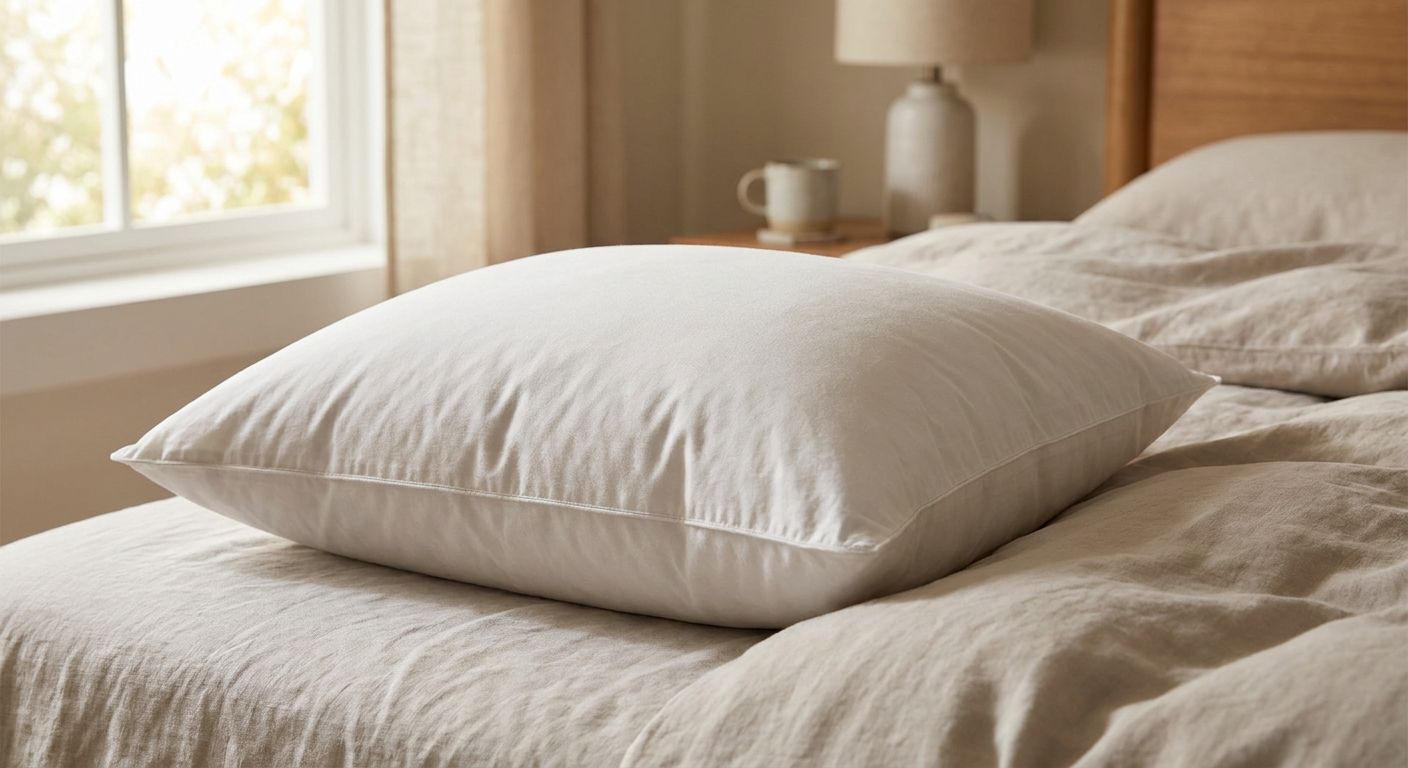
Every hotel that markets a five-star sleep experience puts a 50/50 goose down pillow on the bed, and every guest who tries one asks the same question afterward: is it worth paying three or four times more than a synthetic pillow for a 50/50 down blend? The honest answer depends on how you sleep, what you're replacing, and whether you actually notice loft and drape or just want something that doesn't go flat by 2am.
- A 50/50 goose down pillow blends down clusters with feather for support - buy it if you're upgrading from a flat synthetic pillow.
- Fill power of 500-700 and a thread count of 300+ in the casing separate a durable pillow from a cheap one in 2026.
- Side and back sleepers get the most from the extra loft; strict stomach sleepers should skip 50/50 and go firmer.
- Guest bedrooms and small apartments both benefit - the pillow does more work when there's less room to layer extras.
Why this matters
A synthetic pillow compresses under head weight and stays compressed - that's why you end up folding it in half by 3am. Down and feather clusters spring back after every turn, which is the entire reason hotels standardised on down decades ago and never moved off it. The question in 2026 isn't whether down sleeps better than polyester fill; it's whether a 50/50 blend specifically, rather than a higher down-ratio pillow, earns its price for your bedroom.
If you're the kind of sleeper who's tried the hotel-quality pillows at a resort and wanted that exact feel at home, 50/50 is usually the entry point into that category - denser and more supportive than a 90/10 blend, softer and more forgiving than a solid feather pillow.
Who this is for
This pillow suits people replacing a synthetic or old feather pillow who sleep on their side or back and want support that doesn't collapse overnight. It also suits anyone furnishing a guest bedroom where one pillow has to work for multiple sleep styles, because the 50/50 ratio splits the difference between plush and firm. It does not suit strict stomach sleepers who need a low, flat profile, or anyone with a down allergy who hasn't checked casing and cleaning specs first.
What to look for in 50/50 goose down pillows
Down-to-feather ratio
The 50/50 split means half the fill is down clusters (the soft, three-dimensional fluff) and half is feather (flatter, with a quill that adds structure). This is the ratio that gives you loft without the pillow feeling like a marshmallow - a 90/10 blend feels softer but flattens faster under weight, while a 50/50 holds shape through the night.
Fill power
Fill power measures how much loft a given weight of down produces, and the standard grading scale runs roughly 500 to 900. A 50/50 blend sitting in the 500-700 range is typical and gives you real loft without paying for the ultra-high fill powers reserved for pure down pillows. Anything advertised well below 500 in a "goose down" pillow is a sign the feather content is doing more work than the label suggests.
Casing thread count
A down pillow lives or dies by its casing - too loose a weave and down works its way out through the seams within months. Look for at least 300 thread count in a tightly woven cotton or cotton-blend casing; this is the baseline that keeps clusters contained through years of washing and use.
Weight and loft for your sleep position
A heavier pillow with more fill generally sits higher, which matters if you're a side sleeper needing to fill the gap between shoulder and ear. Back sleepers usually want a slightly lower profile than side sleepers, and this is exactly the kind of distinction covered in guides comparing soft and firm pillows for combination sleepers - if you change position through the night, the 50/50 blend's balance of loft and give tends to outperform a single-density synthetic pillow.
Cleanability and aftercare
Down pillows need proper washing and drying to avoid clumping, and this is where a lot of buyers get caught out - a cheap 50/50 pillow with a loose casing turns into a lumpy mess after two washes. Check whether the pillow is machine washable at home or needs professional cleaning before you commit, because aftercare cost is part of the real price of ownership.
Price relative to what you're replacing
The honest comparison isn't 50/50 down versus nothing - it's 50/50 down versus whatever synthetic or budget feather pillow currently sits on the bed. If that pillow is already flat, lumpy, or older than two years, the upgrade case is straightforward. If you're replacing a decent 90/10 down pillow that's still performing, the case for switching to 50/50 is weaker.
Where a 50/50 down pillow earns its price
The small-footprint bedroom. In compact apartments there's rarely room for a stack of decorative pillows to compensate for one mediocre sleep pillow, so the sleep pillow has to do more work on its own. This is the scenario covered in the guide on 50/50 goose down pillows for small apartments, and it's the strongest single case for the upgrade - one good pillow instead of three mediocre ones. Verdict: Buy.
The guest bedroom that gets used a handful of nights a year. A pillow that has to suit a range of sleepers you don't control - overnight guests with different habits and positions - benefits from the 50/50 blend's middle-ground support more than a household pillow chosen for one person's exact preference. The 5-star hotel pillows for a guest bedroom approach treats this as a hospitality problem, not just a bedding one, and 50/50 down is the standard answer. Verdict: Buy.
The primary bedroom where one partner runs hot. Down blends breathe better than most synthetic fills, but a 50/50 ratio alone won't solve serious overheating - that's more a casing and quilt weight issue. Treat the pillow upgrade as one part of a broader temperature fix, not the whole solution. Verdict: Consider.
The strict stomach sleeper's bed. No down ratio at this loft level suits someone who needs a nearly flat pillow to keep the neck neutral face-down. A 50/50 blend will always feel too high for this sleep position, no matter the fill power. Verdict: Skip.
What to avoid
- "Goose down" pillows with no stated fill power or ratio. If the listing doesn't say 50/50, 90/10, or a fill power number, assume it's mostly feather padded out with a small amount of down - you're paying a down price for a feather pillow.
- Down pillows with a casing under 233 thread count. Below that range, down migration through the seams starts within the first year, and you'll be reshaping a lumpy pillow every few weeks.
- Buying 50/50 for a stomach sleeper because it's the "popular" ratio. Popularity isn't a sleep-position match - a firmer, lower-loft pillow will always serve a stomach sleeper better than any goose down blend.
Verdict comparison
| Sleep style | Loft needed | 50/50 down fit | Verdict |
|---|---|---|---|
| Side sleeper | High, fills shoulder gap | Strong match | Buy |
| Back sleeper | Medium | Strong match | Buy |
| Combination sleeper | Variable | Good match, adapts through the night | Buy |
| Stomach sleeper | Low, near-flat | Poor match | Skip |
| Guest bedroom, mixed sleepers | Medium, must suit anyone | Strong match | Buy |
FAQ
Are goose down pillows worth it compared to synthetic?
Goose down pillows are worth it if your current synthetic pillow has already flattened or lumped, because down and feather clusters recover their shape overnight in a way polyester fill doesn't. If your synthetic pillow is newer and still supportive, the upgrade delivers a smaller improvement.
What does 50/50 mean on a goose down pillow?
It means the fill is half down clusters and half feather by weight. This ratio balances softness from the down with structure from the feather, sitting between a plush 90/10 blend and a firmer, mostly-feather pillow.
Is 50/50 goose down too firm for side sleepers?
No, 50/50 down usually suits side sleepers well because the added loft fills the gap between shoulder and ear. A pure feather pillow would be too firm; a 90/10 down blend might compress too fast under a heavier head.
How long does a 50/50 goose down pillow last?
With a casing of at least 300 thread count and proper washing, a well-made 50/50 down pillow holds its loft for several years longer than a budget synthetic pillow, which typically flattens within 12 to 18 months of nightly use.
Can you machine wash a 50/50 goose down pillow?
Many are machine washable on a gentle cycle with a slow, low-heat dry, but this varies by casing and fill quality. Check the specific care instructions before washing, since a poor spin or high heat can clump the down.
Do 50/50 goose down pillows sleep hot?
Down and feather blends generally breathe better than solid synthetic fills, but a 50/50 ratio alone won't fix serious overheating. Pair the pillow with a breathable casing and lighter quilt for a hot sleeper's bed.
Is 90/10 down better than 50/50 down?
90/10 is softer and lofts higher for the same weight, which suits sleepers who want a plush feel, but it compresses faster under sustained weight than 50/50. 50/50 trades a little softness for more consistent support through the night.
What's the difference between goose down and duck down pillows?
Goose down clusters are typically larger than duck down clusters at the same fill power, which is why goose down pillows are graded and priced slightly higher. Both perform similarly at matched fill power and ratio.
One last thing
The detail most buyers skip is checking the casing weave before checking the fill - a 50/50 blend in a loose casing will underperform a lower down-ratio pillow in a tight, well-constructed one. Fill quality gets the marketing attention in 2026, but casing construction is what determines whether that fill is still doing its job in three years.