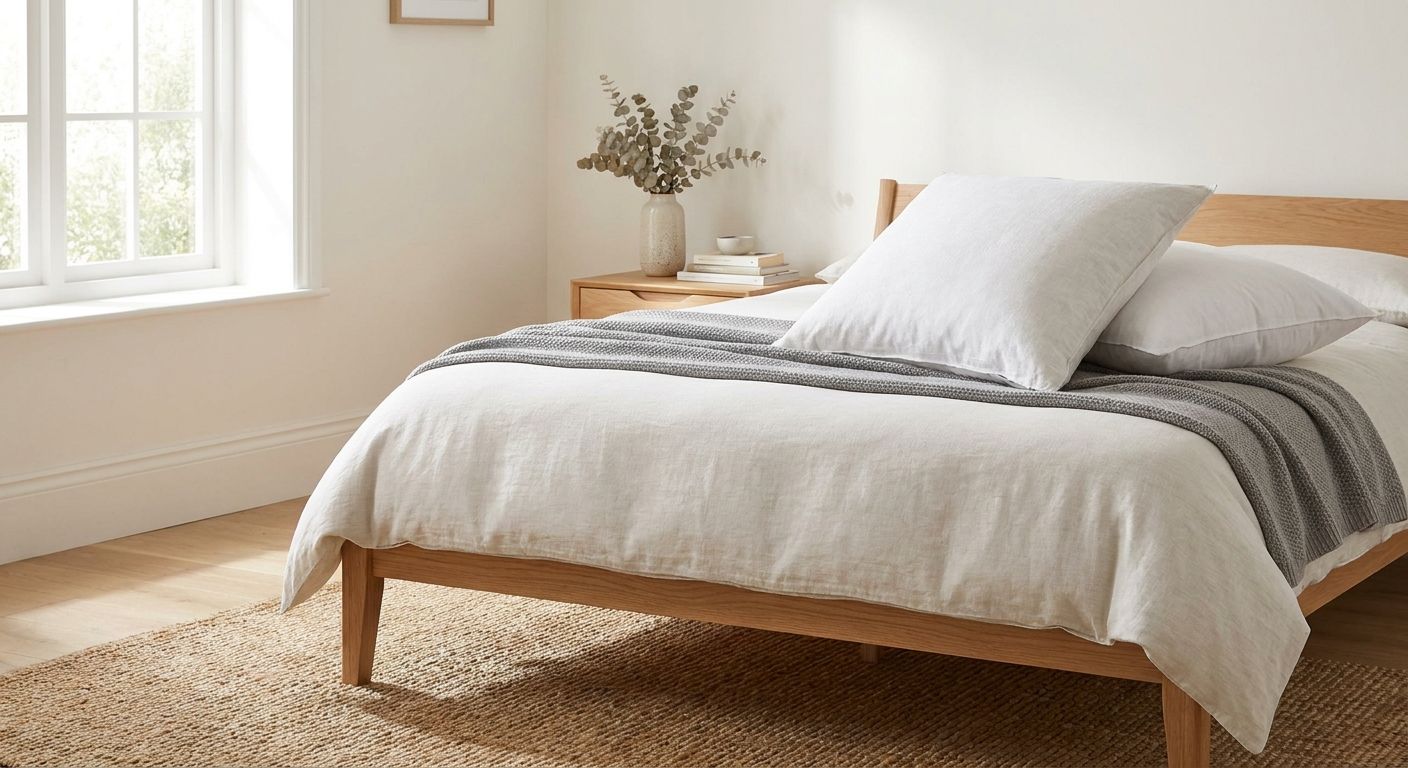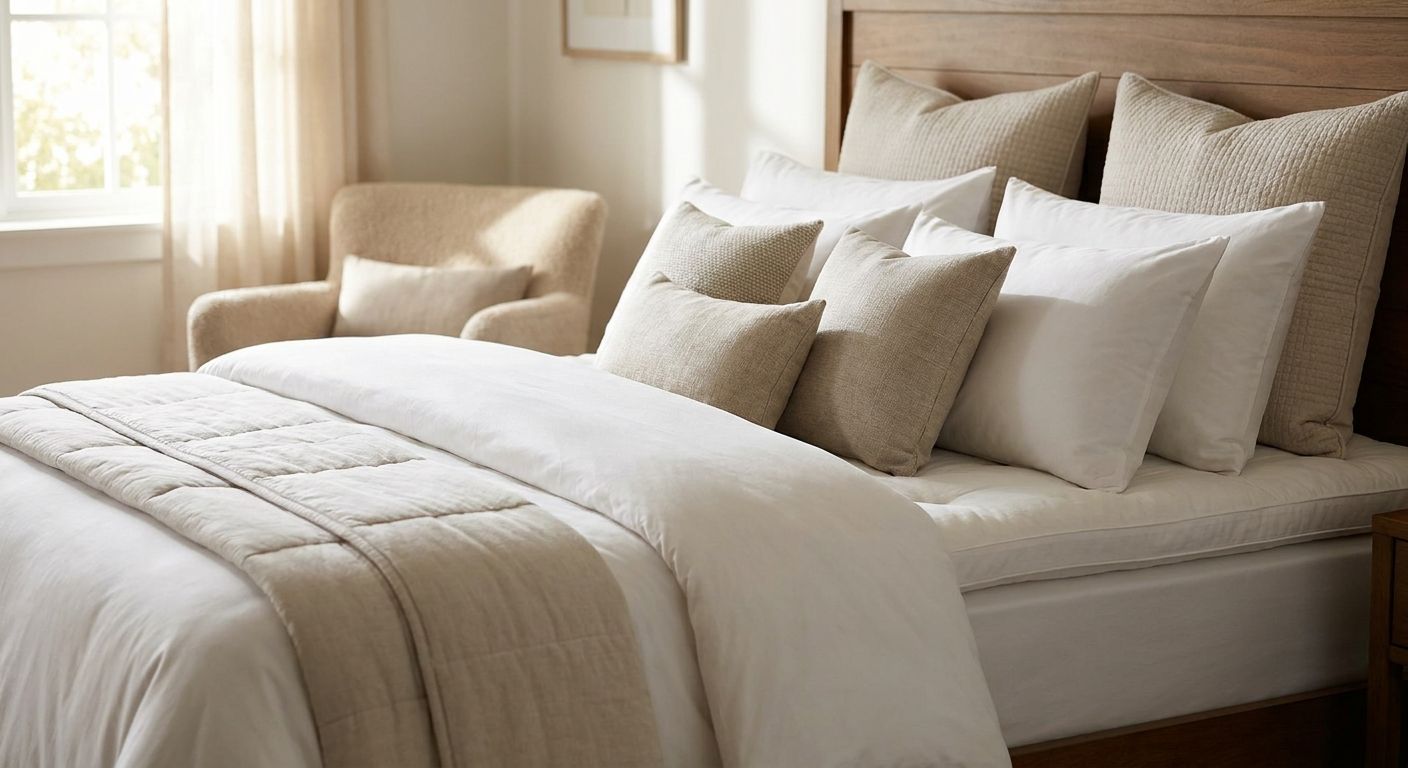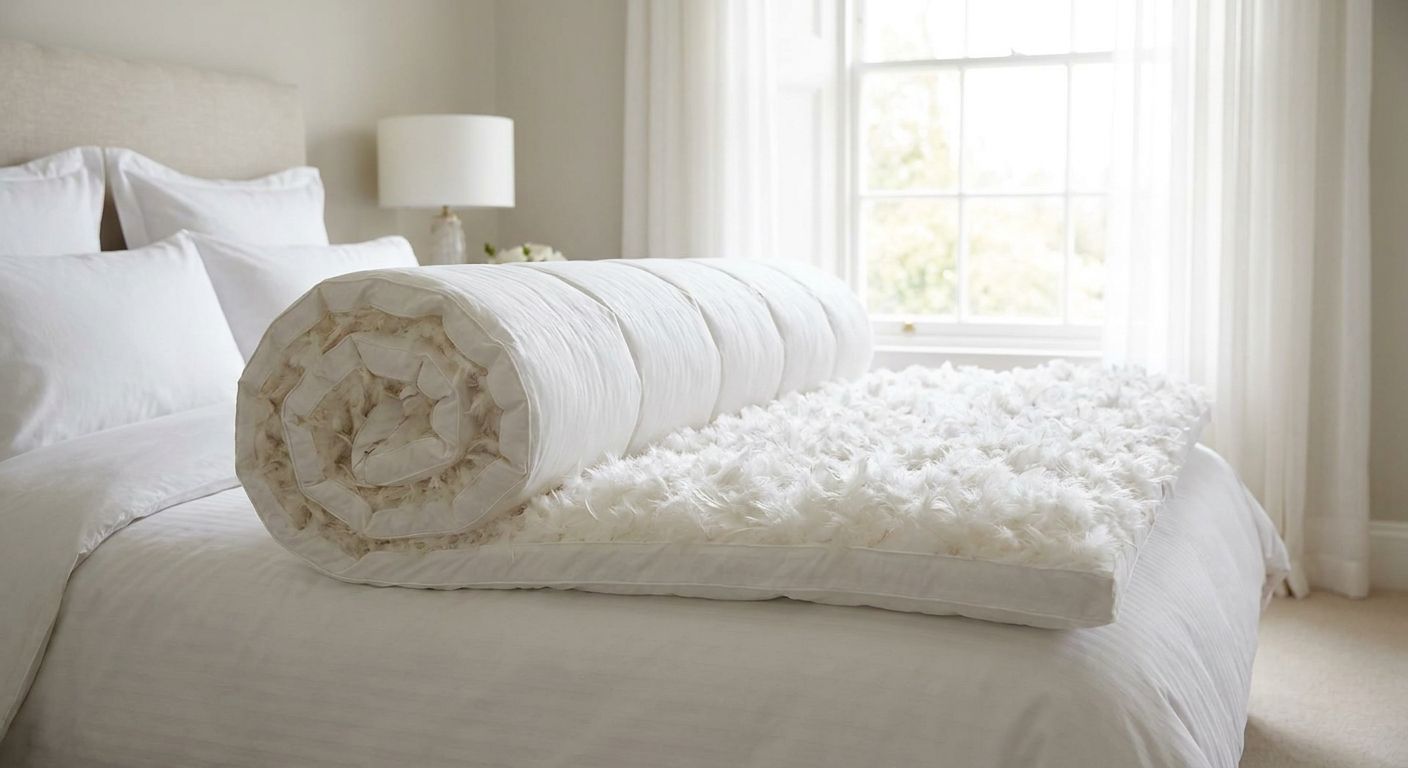
A feather mattress topper is the fastest way to turn a firm mattress into the plush, sink-in bed you remember from a five-star stay — this guide walks through picking the right fill, depth and size so it feels that way for years, not weeks.
- A feather mattress topper adds hotel-grade plushness fast; a feather-and-down blend beats pure feather for comfort and less quill-poke.
- Match topper depth to your mattress using elastic corner straps rated for the extra centimetres, not just a flat sheet.
- Queen (153 x 203cm) and King (183 x 203cm) are the two sizes most Australian hotel-style beds run on — measure before you buy.
- Fluff and air a new topper for the first month to settle the fill; skipping this step is the top cause of lumping.
Why this matters
Hotel groups like InterContinental didn't land on feather-filled bedding by accident — feather compresses and redistributes under body weight in a way foam and synthetic fill can't match, which is why a hotel mattress feels different the second you lie down. A 5-star hotel bedroom at home starts with the layer under the sheet, not the sheet itself.
Most people buying a feather mattress topper in 2026 are trying to fix one of two problems: a mattress that's gone firm with age, or a guest room bed nobody wants to sleep in. A well-fitted topper solves both without the cost of a new mattress.
What you'll need
- Your mattress size and depth, measured in centimetres, not just "queen" or "king" by name
- A feather or feather-and-down topper rated for that depth
- Elastic corner straps or a topper with built-in corner pockets
- A breathable fitted sheet to sit over the topper
- 20 to 30 minutes to fit and air the topper before the first night's sleep
The steps
1. Measure your mattress and bed size first
Get this wrong and nothing else matters — a topper that's even 5cm short on one side will bunch, slide and expose bare mattress by 2am. Australian queen mattresses run 153 x 203cm and king mattresses run 183 x 203cm, but depth varies by 3-5cm between brands. Lay a tape measure across the mattress edge to edge before you shop, and check the mattress topper size guide against your actual numbers rather than the size printed on your bed frame.
Common mistake: assuming a topper labelled "queen" fits every queen mattress. Pillow-top and euro-top mattresses run deeper and need a topper with more strap give.
2. Choose feather-and-down over pure feather for comfort
Pure feather fill is firmer, cheaper and more prone to quill poke-through over the first few months. A feather-and-down blend sits softer, lofts back up faster after you get out of bed, and is what most hotel-style bedding actually uses. If you've slept on a hotel bed and loved it, you were almost certainly on a blend, not straight feather.
Why it matters here: the whole point of a feather mattress topper is that hotel sink-in feel — pure feather alone rarely delivers it.
3. Match the topper to your mattress depth
Toppers come in a handful of depth bands, and picking the wrong one either does nothing or makes your fitted sheet impossible to tuck. A topper that's too thin sits flat within weeks; one that's too thick fights your existing sheets and quilt. Run through the topper thickness guide before ordering, especially if your mattress is already a plush or pillow-top model.
Expected outcome: the topper should add visible loft under a fitted sheet without creating a gap at the corners.
4. Fit the topper corner to corner with straps
Lay the topper feather-side up, then work the elastic straps or corner pockets onto each mattress corner one at a time, pulling gently so the fabric sits flat rather than twisted. Straps that are too loose let the topper walk across the mattress overnight; straps that are cranked too tight distort the loft in that corner.
Common mistake: fitting all four corners loosely first and tightening later. Do each corner fully before moving to the next, or the topper ends up skewed.
5. Air and fluff before the first sleep
Feather fill compresses in shipping and packaging, so a topper straight out of the box will feel flatter than it should. Unpack it at least 4-6 hours before you plan to sleep on it, shake it out, and pat or knead it across the surface to redistribute the feathers evenly.
Why it matters: skipping this step is the single biggest reason people think their new feather mattress topper feels "thin" — it hasn't lofted yet.
6. Layer your bedding over the top for the hotel finish
Once the topper is fitted, the sheet and quilt you layer on top decide whether the bed actually reads as hotel-style or just "has extra padding." A crisp, well-chosen sheet over a properly lofted topper is what sells the whole look — see luxury bedding for a hotel-inspired guest room for how the layers stack together.
Expected outcome: a bed that looks pillowy and pulled-together, not lumpy under the sheet.
7. Maintain it weekly for the first month
For the first four weeks, fluff and rotate the topper every few days to stop the feathers settling into permanent clumps at the foot or centre of the bed. After that, a monthly shake-out and occasional airing outdoors on a dry day keeps the loft consistent.
Common mistake: leaving a new topper untouched under a mattress protector for months, then wondering why one side feels flat.
Troubleshooting
Feathers clumping in one spot: shake the topper out fully, then knead the clumped area by hand to redistribute the fill. If it recurs weekly, the topper may be underfilled for your body weight.
Topper sliding or bunching overnight: the corner straps are too loose, or the topper is a size too big for the mattress. Re-check the mattress topper size guide and tighten every strap, not just the two you can reach easily.
Sleeping too hot: feather retains less heat than memory foam, so this usually means the sheet or quilt layered on top is the problem, not the topper itself. Swap to a lighter thread-count sheet before replacing the topper.
Quills poking through the fabric casing: more common on pure feather than feather-and-down blends. A fitted mattress protector between the topper and the sheet stops this without changing the feel.
Bed doesn't look "hotel-plush" once made: the topper may be lofted correctly but the bedding on top is too thin or the wrong weight to show the extra height. Check how the layers are meant to sit together before assuming the topper is at fault.
Tools and resources
- Mattress topper size guide — for matching topper dimensions to your exact mattress
- Topper thickness guide — for choosing depth by mattress type
- Luxury bedding for a hotel-inspired guest room — for the sheet and quilt layers that go on top
- A soft tape measure, for checking mattress depth before you order
- A dry, sunny afternoon, for the first full airing after unpacking
What to do next
If the bed you're upgrading is a spare room rather than the main bedroom, the buying priorities shift slightly — guest beds get slept in less often but need to impress immediately, so fit and first-night loft matter more than long-term durability. There's a dedicated guide on refreshing a guest room bed with a hotel-style mattress topper that covers exactly that trade-off.
FAQ
What is a feather mattress topper best for?
A feather mattress topper is best for softening a firm or ageing mattress without buying a new one, and for recreating the plush, sink-in feel of a hotel bed. It works especially well on top of firmer innerspring or older mattresses that have lost their give.
Is a feather-and-down topper better than pure feather?
Yes, for most sleepers a feather-and-down blend is softer, lofts back up faster and has less quill poke-through than pure feather. Pure feather is firmer and cheaper but flattens under weight more quickly.
How thick should a mattress topper be?
Thickness should match your mattress type — a firm innerspring mattress usually needs more loft than a mattress that already has a pillow-top or plush layer. Check the mattress and existing bedding depth before picking a thickness so your fitted sheet still tucks properly.
Do feather mattress toppers need straps?
Yes, elastic corner straps or built-in corner pockets keep a feather mattress topper from sliding during the night. Without them the topper shifts, bunches, and exposes bare mattress at the edges within days.
How often should you fluff a feather mattress topper?
Fluff a new feather mattress topper every few days for the first month to settle the fill evenly, then monthly after that. Regular fluffing prevents permanent clumping at the foot or centre of the bed.
Do feather toppers sleep hot?
No, feather fill breathes better than memory foam and generally sleeps cooler. If a bed feels too warm, the sheet or quilt layered on top is the more likely cause than the topper itself.
What size mattress topper fits a queen bed?
A queen mattress topper needs to fit a 153 x 203cm mattress, but always measure your actual mattress depth first since pillow-top and euro-top mattresses run deeper. A topper sized for a standard queen can come up short on a deeper mattress.
Can you use a feather mattress topper on a guest bed?
Yes, a feather mattress topper is one of the fastest upgrades for a guest bed that doesn't get slept in often but needs to impress on the first night. Fit and initial loft matter more than long-term wear for a bed used occasionally.
One last thing
The detail most people skip is airing the topper outdoors, not just shaking it out indoors — feather fill releases trapped moisture from packaging and manufacturing better in open air than under a fan. Give a new feather mattress topper one full afternoon outside on a dry day before it ever meets a sheet, and the loft difference is noticeable that same night.