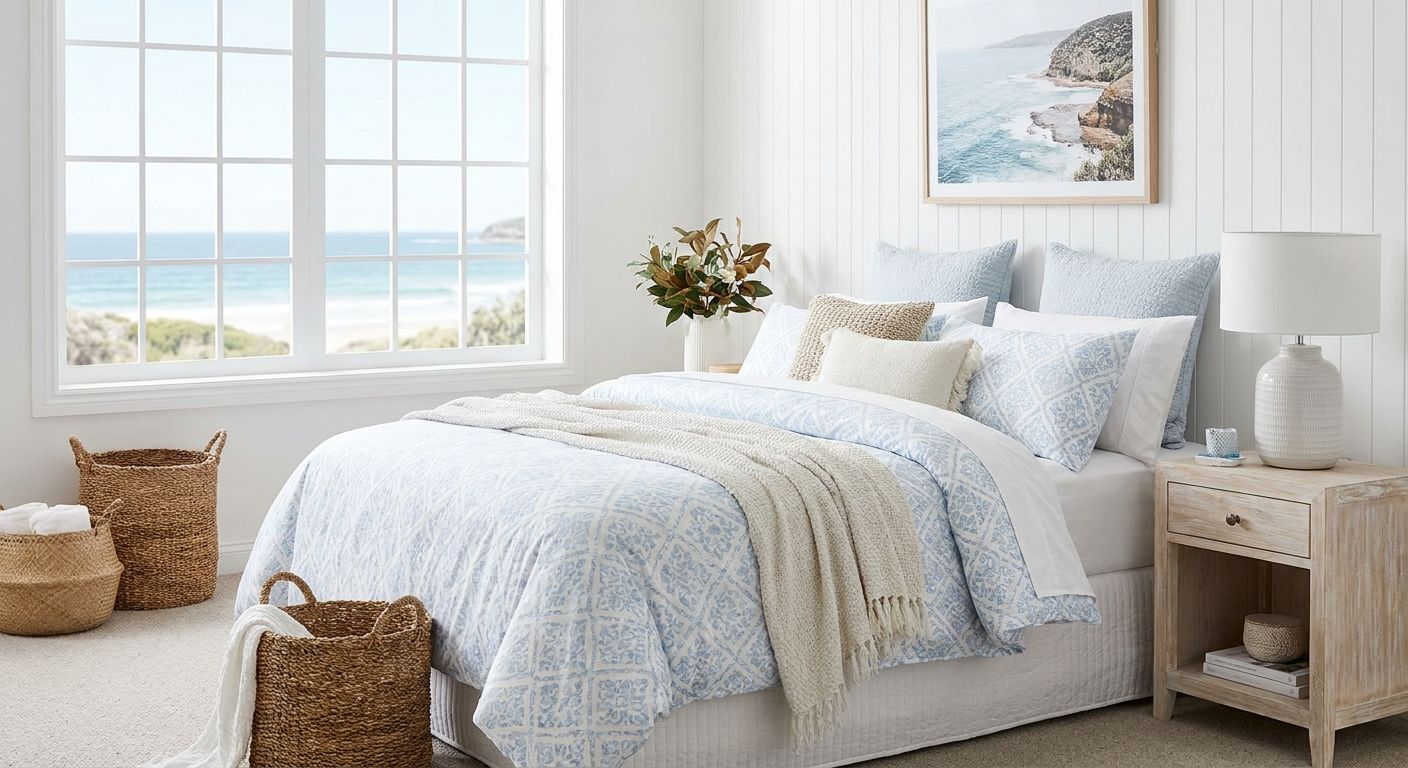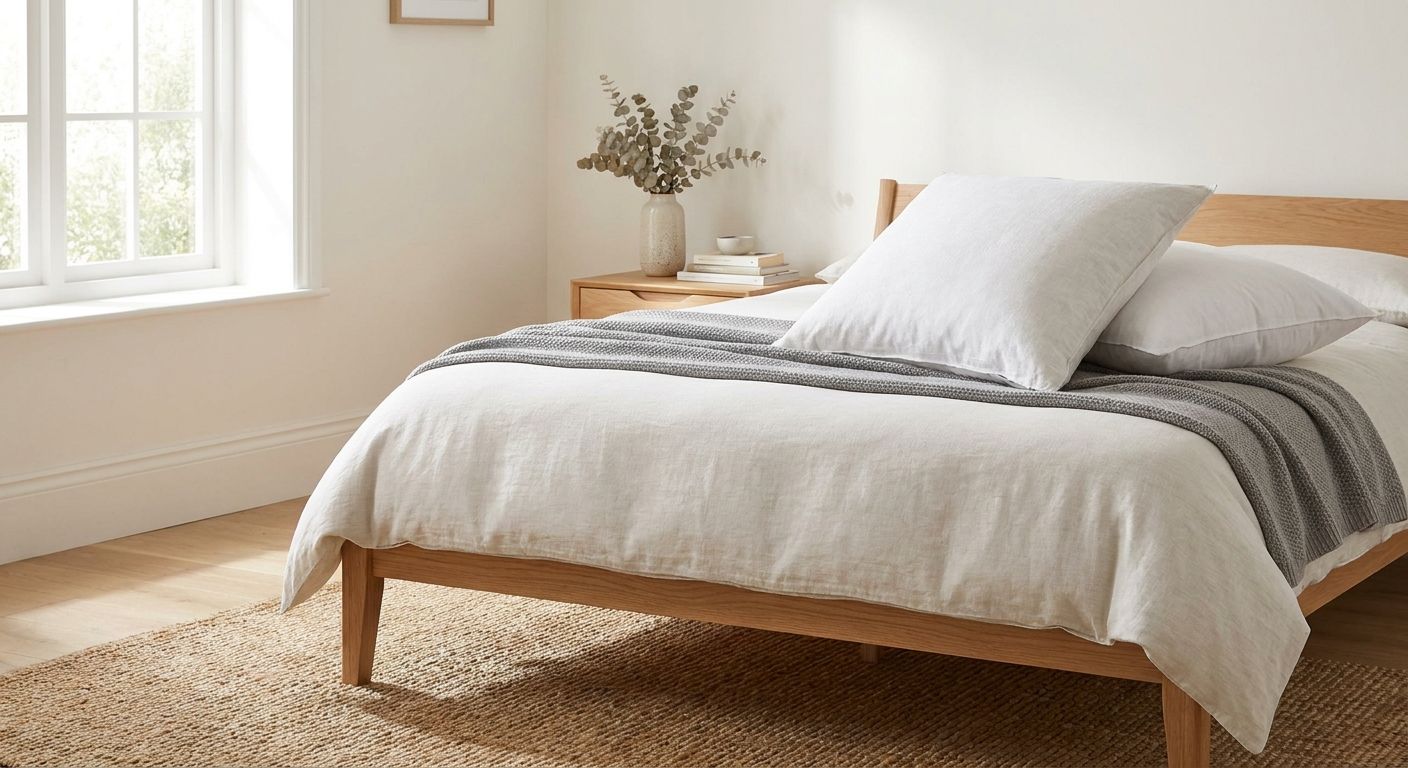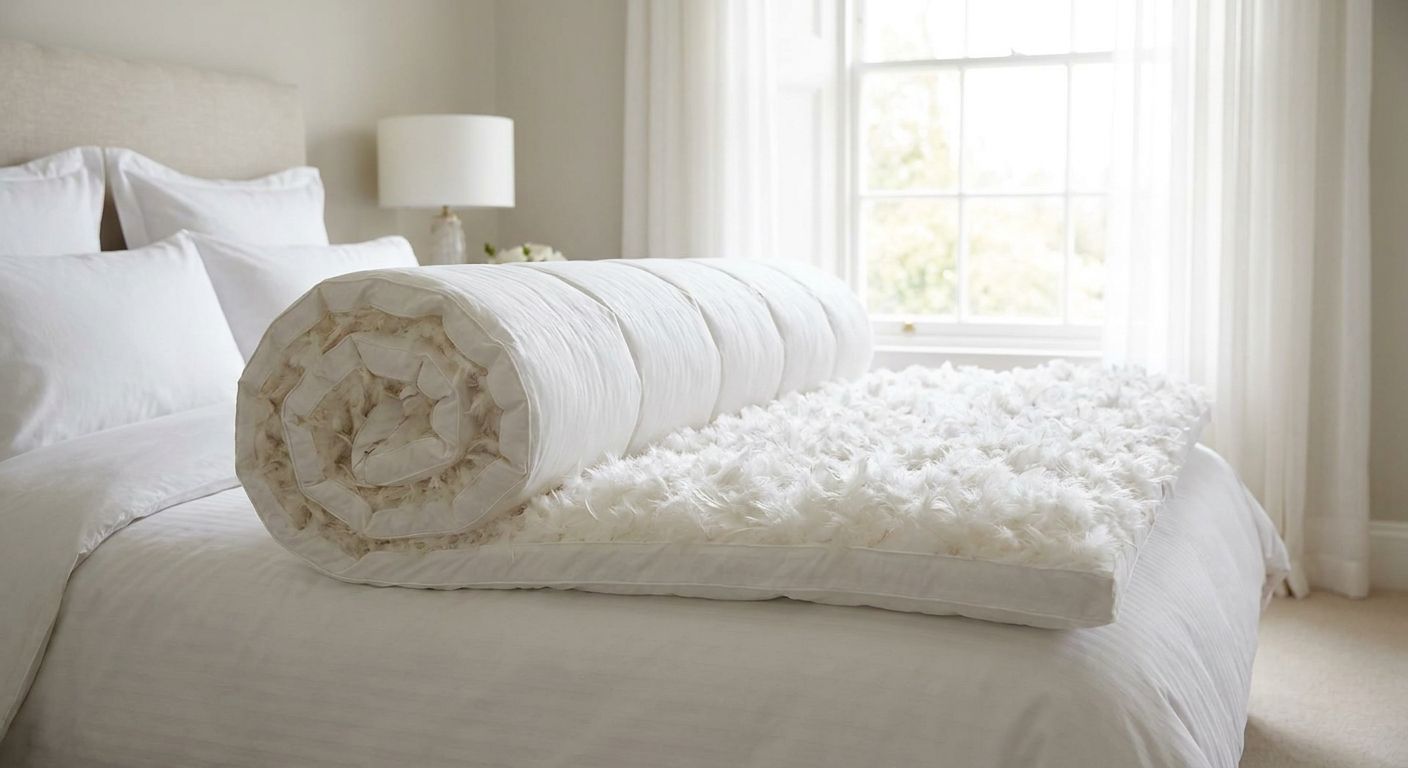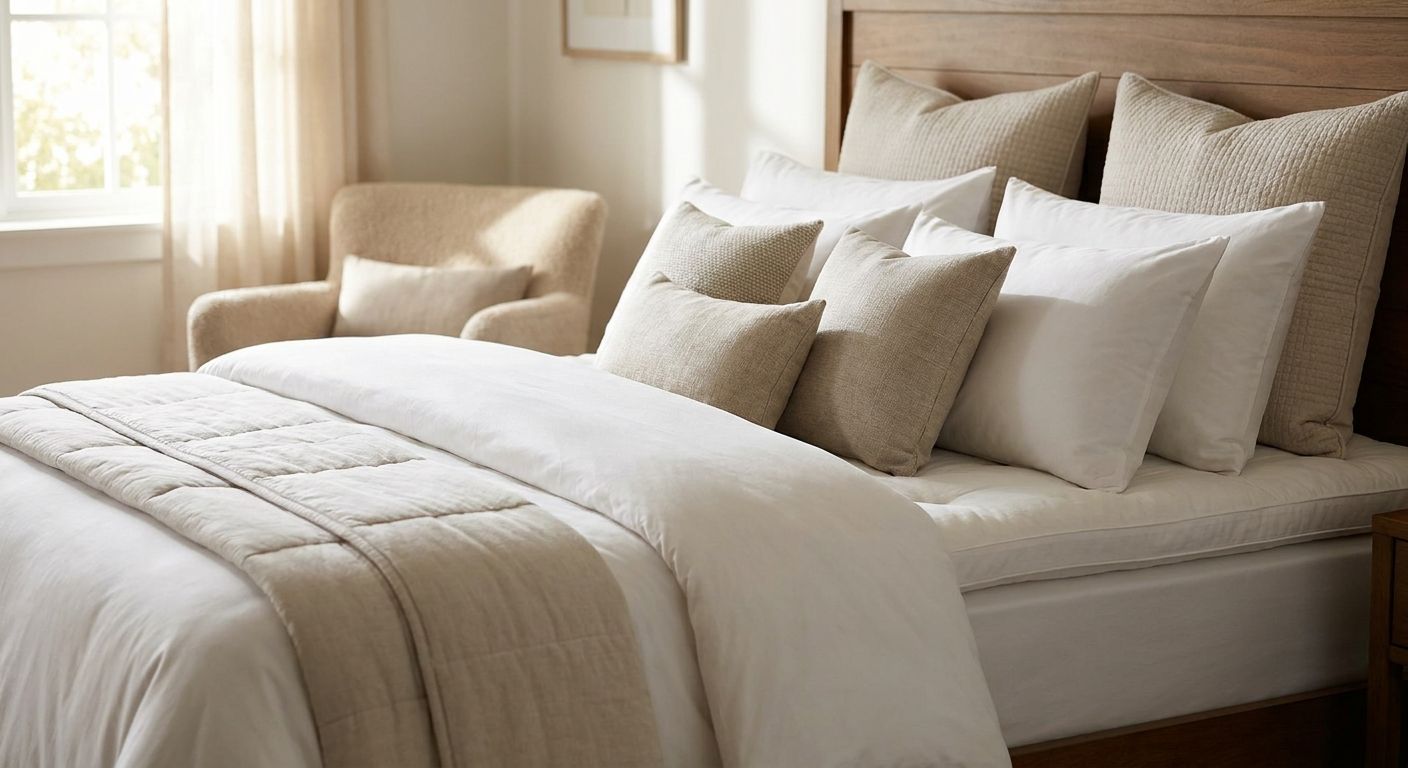
Getting a bed to look like a five-star InterContinental suite isn't about buying more cushions. It's about the order you stack things in and the weight you choose at each layer. This guide breaks down how to layer a hotel bed from the mattress topper up, so the finished result reads as effortless rather than overstuffed.
- Layering a hotel bed in 2026 starts with a topper, not the sheets. Skip it and every layer above shifts.
- Elegante's InterContinental-style bedding works best in a three-tier pillow stack: sleeping, support, decorative.
- Match doona weight to season first. A heavy goose down quilt in Australian summer is the most common layering mistake.
- Hospital-corner the fitted sheet before adding the quilt cover or the whole stack looks lumpy within a week.
Why this matters
A hotel bed doesn't look expensive because of thread count alone. It looks expensive because every layer sits flat and square before the next one goes on. Skip a step, or layer out of order, and even genuinely luxury bedding ends up reading like a rumpled guesthouse bed by day three. Get the sequence right once and remaking the bed each morning takes under two minutes.
What you'll need
- A mattress topper matched to your mattress size. Check the mattress topper size guide before buying, because undersized toppers slide within a week
- A fitted sheet deep enough to cover a topper-plus-mattress stack
- A flat top sheet, optional but standard in hotel styling
- One doona or quilt insert plus a duvet cover in a weight suited to the season
- Four to six pillows in mixed firmness. Elegante recommends hotel-quality pillows in at least two densities
- A folded throw, bench scarf or runner for the foot of the bed
- 15 to 20 minutes, most of it spent on the pillow stack
The steps
1. Lay the topper before anything else
The topper is the layer everyone forgets and the one that makes or breaks the finished look. A topper too small for the mattress bunches under the fitted sheet and creates a visible ridge down the middle of the bed. Measure your mattress against the topper listing before you buy. A queen topper on a king mattress will not sit flush no matter how tightly you pull the sheet.
Expected outcome: a smooth, even surface with no gaps at the corners.
Common mistake: buying a topper on size name alone. Sizing varies slightly between brands, so check centimetre dimensions rather than the label.
2. Fit the sheet with hospital corners
Pull the fitted sheet fully over all four corners of the topper-mattress stack. Then tuck the flat sheet using a hospital corner fold: tuck the end in, fold the side triangle down, tuck the remaining flap under. This is the single technique that separates a hotel bed from a home-made one. It takes about 90 seconds per side once you've done it twice.
Expected outcome: sharp, straight lines at every corner with no sagging fabric.
Common mistake: leaving the top sheet loose at the foot. A loose foot sheet is the fastest way to make an otherwise well-styled bed look unfinished.
3. Choose doona weight for the season, not the look
A heavy goose down quilt looks luxurious in a photo but is genuinely uncomfortable through an Australian summer. This is the most common layering mistake of 2026. Pick a lighter fill for warmer months and reserve heavier fill for winter, or keep two inserts and swap the cover only. For a guest room that needs to work year-round, a 50/50 goose down blend gives warmth without the bulk of a full down fill.
Slide the insert into the duvet cover, close it, then shake it out from the corners so the fill settles evenly before the doona goes on the bed.
Expected outcome: a doona that lies flat with no bunching at the foot.
Common mistake: laying the quilt on the bed before shaking out the fill. Uneven fill reads as lumpy under any cover, however good the fabric.
4. Build the pillow stack in three tiers
Hotel pillow styling works in tiers, not in a random pile. The back row is your sleeping pillows: firmer support for back and side sleepers, softer for stomach sleepers. If you change position through the night, pair a firm and a soft pillow rather than buying two identical ones.
The middle row is a decorative Euro square, slightly smaller than the sleeping pillows and angled against the headboard. The front row is one or two lumbar or accent cushions laid flat, angled slightly inward toward the centre of the bed.
Expected outcome: a stack that steps down in height from headboard to foot, not a flat wall of identical shapes.
Common mistake: using identical firmness for sleeping and decoration. Decorative Euro squares are firmer by design and feel wrong if you actually sleep on them.
5. Fold and place the throw
Fold a throw or bench scarf into thirds lengthwise and lay it across the foot third of the bed, roughly level with where your knees would sit. This one addition does more visual work than an extra pillow and takes ten seconds.
Expected outcome: a clear break in the colour block of the bed, without covering more than a third of the surface.
Common mistake: draping the throw diagonally across a corner. It photographs fine but slides off within a day of actual use.
6. Square everything off
Step back from the bed and square every visible edge: quilt cover, sheet fold, pillow angles. Hotel styling relies on straight lines more than on any single product, so this final pass matters more than people expect.
Expected outcome: a bed that looks intentional from the doorway, not assembled piece by piece.
Troubleshooting
The quilt slides toward the foot of the bed overnight. The insert is likely too small for the cover, or the ties aren't secured at all four corners. Fasten every tie point inside the cover, not just the top two.
Pillows go flat by morning. This is a fill problem, not a positioning one. A pillow that has collapsed and no longer recovers its shape has reached the end of its support life. Replace it rather than fluffing it nightly.
The topper shifts and bunches under the sheet. Confirm the topper size matches the mattress exactly and check whether it has an elasticated skirt. A topper without one will migrate under regular use.
The bed feels too hot even with a light cover. The insert, not the cover, sets warmth. Swap to a lighter fill for the season rather than changing the cover fabric.
The finished bed looks flat despite good bedding. Almost always a pillow-height problem. The back row needs to sit noticeably taller than the front, so add one more sleeping pillow to the back tier before adjusting anything else.
Sheets keep untucking at the corners. You likely skipped the hospital corner fold. Redo the tuck-fold-tuck sequence rather than pulling the sheet tighter, which stresses the fabric instead of securing it.
Tools and resources
- Styling a made bed with an Australian doona covers seasonal fill weight in more depth
- Luxury bed sheets for a 5-star hotel feel covers weave and finish options
- A tape measure, for the topper and mattress check in step 1
- Two duvet covers, so you can swap the look without swapping the insert
What to do next
Once the layering sequence is second nature, style the whole bedroom around it. Headboard, bedside tables and lighting all change how the finished bed reads in the room, and in 2026 that full-room approach is where most hotel-at-home projects gain the most. The Elegante guide below takes it from bed to complete bedroom.
FAQ
How do I layer a hotel bed at home in 2026?
Start with a correctly sized mattress topper, fit the sheet with hospital corners, add a season-appropriate doona, then build pillows in three tiers from sleeping to decorative. Finish with a folded throw across the foot third of the bed.
How many pillows does a hotel-style bed need?
Four to six pillows across three tiers works for most bed sizes: two sleeping pillows at the back, one Euro square in the middle, and one or two lumbar cushions at the front. More than six starts to look cluttered rather than styled.
Should I use a mattress topper under hotel bedding?
Yes. The topper gives the sheet and quilt layers a smooth, even surface to sit on. Skipping it is the most common reason a hotel-style bed looks lumpy within a week.
What quilt weight is best for an Australian summer bedroom?
A lighter fill or a 50/50 goose down blend suits warmer Australian months better than a heavy full-down quilt, which traps too much heat overnight. Keep the heavier insert for winter and swap seasonally.
Is a top sheet necessary for hotel-style bed layering?
A flat top sheet is standard in hotel styling and adds a clean line between the sleeper and the quilt cover. It is optional if you prefer sleeping directly under the duvet.
How do you stop a doona from sliding inside its cover?
Secure every corner tie inside the cover, not just the top two. Shake the insert out from the corners after fitting so the fill settles evenly across the full width.
What is the difference between firm and soft pillows for layering?
Firm pillows hold their shape for the back row and decorative styling, while softer pillows suit side and stomach sleepers who need more give. Mixing both in one stack creates the layered look hotels use.
How often should hotel-style pillows be replaced?
Replace a pillow once it has visibly flattened and no longer recovers its shape after fluffing. Layering fresh pillows on top of collapsed ones is what makes a styled bed sag in the middle.
One last thing
The detail most people skip is shaking out the doona insert before it goes on the bed, not after. Fill that has already settled evenly stays flat for days, while fill you only smooth on the surface bunches again within hours of someone sitting down.