Allergy-prone sleepers in Australia don't need another doona that promises "hypoallergenic" on the label and then turns out to be dry-clean only. This guide breaks down what actually matters in a down alternative doona for the humid, dust-mite-heavy conditions most Australian bedrooms deal with, and what to skip no matter how good the marketing sounds.
- A down alternative doona australia buyer needs washable hollow-fibre or microfibre fill, not feather blends, to control dust mite allergens.
- 300+ GSM synthetic fill suits winter in southern states; 200-300 GSM covers most of the year in Queensland and the NT.
- Box-stitched casing beats sewn-through quilting because it stops fill clumping where allergens collect.
- Skip wool and goose-down blends for allergy-prone sleepers even when they're marketed as premium in 2026.
Who this is for
This is written for anyone who wakes up sneezing, congested or itchy and has already swapped their pillows without fixing the problem. If dust mite allergy, asthma, or a feather sensitivity is in the picture, the doona itself is often the missing piece — not the sheets, not the mattress. Australian humidity in coastal cities makes dust mite populations worse than in drier climates, which raises the stakes on fill type and washability specifically for this audience.
Elegante stocks a doona range built around 5-star hotel bedding standards, and the home inspiration guides below cover how to match weight and fill to your climate and bedroom setup. Start on the Elegante homepage if you want to browse current stock before reading further.
Why this matters
Down and feather fill contains proteins that trigger allergic reactions in a meaningful share of sensitive sleepers, and feather quills work their way through even a tight weave over time. Synthetic hollow-fibre and microfibre fills don't carry that protein, and — critically — most can be machine washed at 60°C, the temperature that kills dust mites. Down and wool doonas are typically dry-clean only, which means the allergen load just keeps building between professional cleans. For an allergy-prone household in 2026, washability isn't a convenience feature. It's the difference between a doona that actually helps and one that quietly makes things worse.
What to look for in a down alternative doona for allergy-prone sleepers
Fill type: hollow-fibre or microfibre, not down or feather
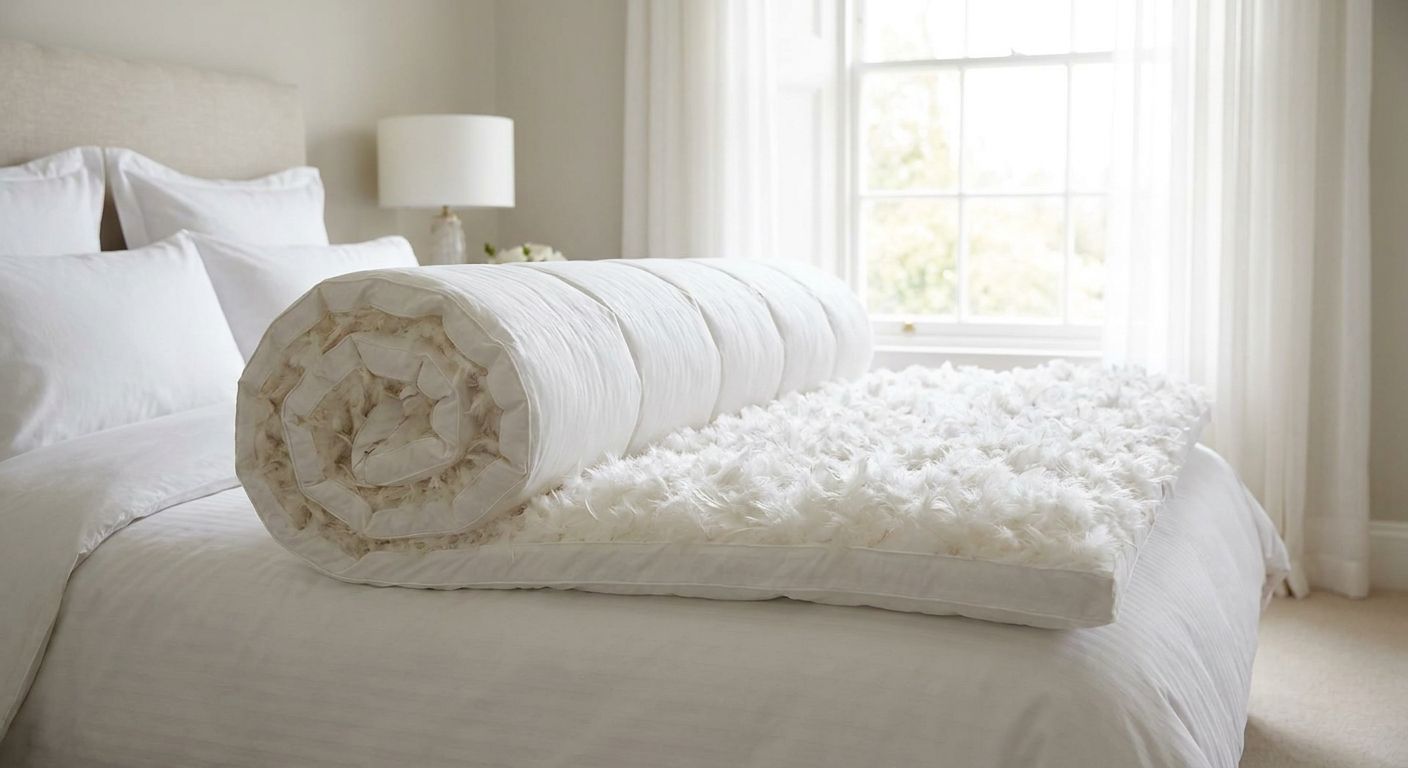
Hollow-fibre polyester and microfibre fills mimic the loft of down without the animal protein that triggers most bedding allergies. They're also lighter to wash and dry faster, which matters if you're washing a doona every few weeks rather than every few months.
Fill weight (GSM) matched to your climate
A doona rated around 200-300 GSM suits most of the Australian year in warmer states, while 400-500 GSM synthetic fill is the winter-weight range for Victoria, Tasmania and the ACT. Too heavy a fill traps heat and sweat overnight, and a warm, damp doona is exactly the environment dust mites thrive in.
Shell fabric and thread count
A tightly woven cotton or cotton-blend shell — generally 300 thread count or higher — physically blocks fill fibres and dust particles from migrating through the fabric. A loose weave lets allergens pass both ways, undermining an otherwise good fill choice.
Box-stitched (not sewn-through) construction
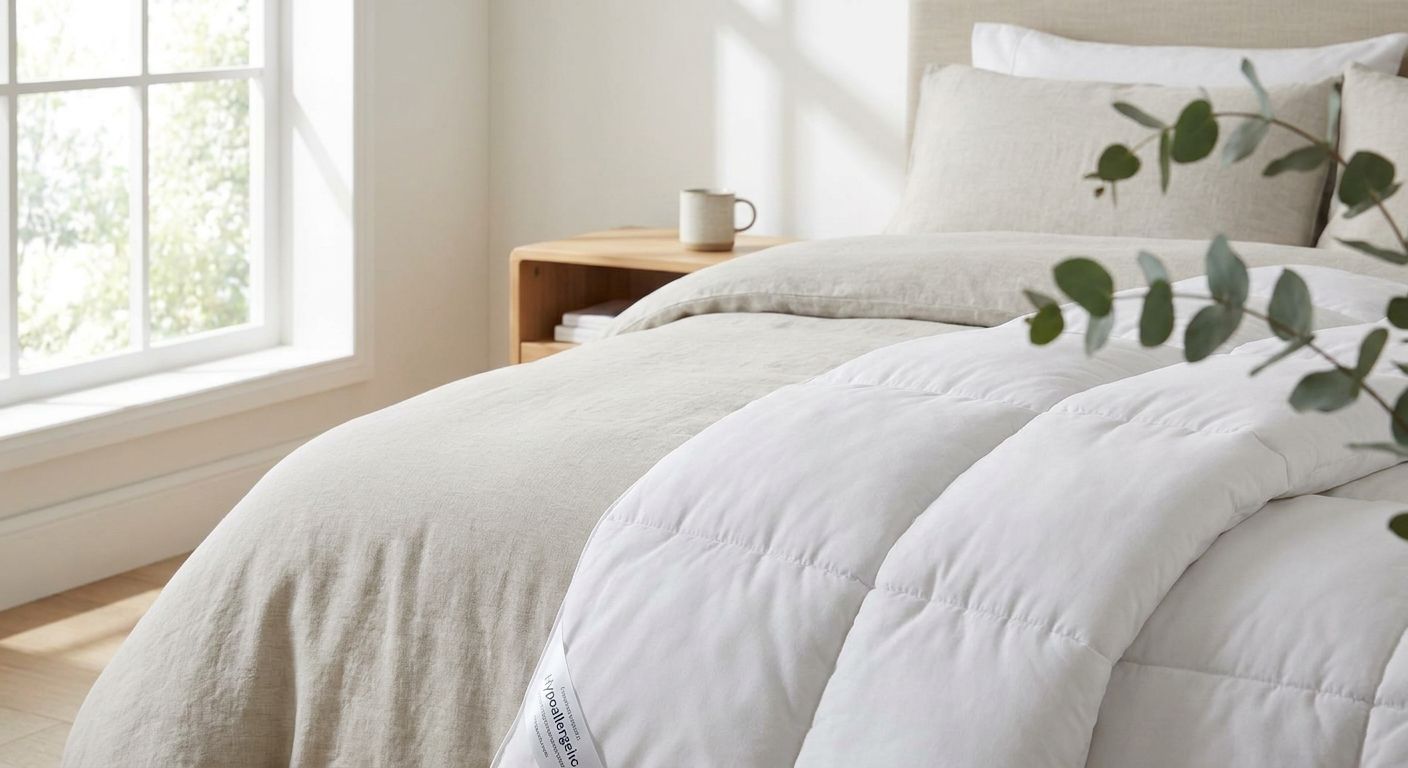
Box stitching creates individual fill pockets so the microfibre stays evenly distributed instead of clumping in corners. Clumped fill traps moisture and dust in one spot, creating a concentrated allergen zone instead of an even one.
Machine washability at 60°C
If a doona can't be washed at the temperature that kills dust mites, its hypoallergenic claim is mostly cosmetic. Check the care label before checking the marketing copy — this single detail separates doonas that manage allergies from doonas that just say they do.
Certification or clear fill disclosure
Look for fill composition stated in grams per square metre and fabric composition listed in full, not vague terms like "premium fill." A supplier that discloses GSM and fabric blend is one that's confident in what's inside the casing.
Top picks for allergy-prone sleepers
The safe pick — all-season hollow-fibre doona. A 300 GSM hollow-fibre fill in a 300+ thread count cotton shell covers spring through autumn across most of Australia and washes at 60°C without losing loft. This is the doona to start with if you're not sure what climate profile you need. Buy.
The winter workhorse — heavier synthetic fill. Stepping up to 400-500 GSM hollow-fibre fill adds warmth for Victoria, Tasmania and the ACT without introducing down or feather. It's bulkier to wash, so factor in a larger-capacity machine or a laundromat run. Buy for cold-climate bedrooms, Skip if you live somewhere humid year-round.
The wildcard — bamboo-blend microfibre. Bamboo-derived fibre blended with microfibre fill has natural moisture-wicking properties, which helps in humid coastal bedrooms where sweat drives dust mite activity. It's a newer category and harder to compare directly on GSM across brands, so check the fill disclosure carefully before buying. Consider.
The layering strategy — two lightweight doonas instead of one heavy one. Two 200 GSM hollow-fibre doonas layered in winter and separated in summer give more temperature control than a single heavy doona, and each layer is lighter and faster to wash. It costs more upfront than one doona but solves the all-season problem properly. Consider.
For styling once you've picked a fill and weight, the made-bed styling guide covers how to layer a doona with a cover and throw without adding bulk that traps heat.
What to avoid
- Goose or duck down and feather blends, including 50/50 blends marketed as premium — the feather component still carries allergenic protein and the casing is almost always dry-clean only. The 50/50 goose down quilt guide is worth reading if you want to understand why these work well for non-allergy households but not this one.
- Wool-filled doonas sold as "natural and hypoallergenic" — wool is a common allergen in its own right and most wool doonas require dry cleaning, which defeats the washability requirement above.
- Doonas with vague fill descriptions — if a listing doesn't state GSM or fabric composition, assume it hasn't been tested for either, and move on.
Verdict comparison
| Pick | Fill weight | Washable at 60°C | Best for | Verdict |
|---|---|---|---|---|
| All-season hollow-fibre | ~300 GSM | Yes | Most Australian climates | Buy |
| Winter synthetic fill | 400-500 GSM | Yes | VIC, TAS, ACT winters | Buy (cold climates) |
| Bamboo-blend microfibre | Varies by brand | Usually | Humid coastal bedrooms | Consider |
| Layered lightweight pair | 2 x 200 GSM | Yes | All-season flexibility | Consider |
| Goose/duck down blend | N/A | Rarely | Non-allergy households only | Skip |
| Wool fill | N/A | Rarely | Non-allergy households only | Skip |
FAQ
What is the best down alternative doona in Australia for allergies?
A hollow-fibre or microfibre fill in a tightly woven, machine-washable shell is the safest choice for allergy-prone sleepers in 2026. Look for stated GSM and fabric composition rather than a generic hypoallergenic label.
Is a down alternative doona as warm as a real down doona?
A quality hollow-fibre fill at the right GSM can match down warmth for most Australian winters, though ultra-premium goose down still edges out synthetic fill at the very top end of loft. For allergy management, the trade-off favours synthetic fill.
How often should you wash a down alternative doona?
Every 4-8 weeks at 60°C is standard practice for allergy-prone households, more often during humid months. Check the specific care label since fill density affects wash cycle length.
Can a 50/50 goose down quilt work for someone with mild allergies?
It's a risk not worth taking if allergy symptoms are already present, since even a 50% down fill carries allergenic protein. A 100% synthetic fill removes that variable entirely.
What GSM doona is right for a Queensland bedroom?
Most Queensland bedrooms are comfortable year-round with a 200-300 GSM hollow-fibre fill. Anything heavier traps heat and moisture in a climate that's already humid most of the year.
Does thread count matter for allergy-prone sleepers?
Yes — a shell fabric at 300 thread count or higher physically blocks dust and fill migration better than a loose weave. It's a smaller factor than fill type but worth checking alongside GSM.
Are bamboo-blend doonas actually better for allergies?
Bamboo-blend microfibre fill offers moisture-wicking properties that can reduce the damp conditions dust mites need to thrive. It's not a universal upgrade over standard hollow-fibre fill, so compare GSM and washability before assuming it's superior.
How much does a down alternative doona cost in Australia?
Pricing varies widely by brand, size and fill weight, so check current listings directly rather than relying on a fixed figure. Fill quality and shell fabric are better predictors of long-term value than price alone.
One last thing
The detail most allergy-prone shoppers skip is checking whether the doona's care label actually says "machine washable" versus "spot clean only" — plenty of synthetic-fill doonas still carry dry-clean-only instructions because of how the shell fabric is finished, not the fill itself. Read the label before you read the marketing copy, every single time.