Choosing between a natural fill quilt and a synthetic fill quilt comes down to three things: how you sleep, what you're sensitive to, and how much maintenance you're willing to do. This guide breaks down the real differences so you can pick the right quilt for your bedroom, not just the one with the nicest packaging.
- Natural vs synthetic quilt fill comes down to warmth-to-weight ratio: goose down insulates more per gram than polyester fibre.
- A 50/50 goose down quilt suits cold Australian bedrooms and guest suites where loft and drape matter most - Buy for winter comfort.
- Synthetic fill quilts wash easier, cost less upfront, and suit allergy-prone households - Buy for low-maintenance bedrooms.
- Down quilts need airing and specific washing care; skip them if you can't commit to that upkeep.
- Match GSM (grams per square metre) to your climate before matching brand or fill type.
Why this matters
Most people pick a quilt on softness alone, then wake up sweating in July or shivering under a lightweight synthetic in June. The fill inside the quilt determines warmth retention, breathability, and how long it holds its shape - not the thread count on the cover.
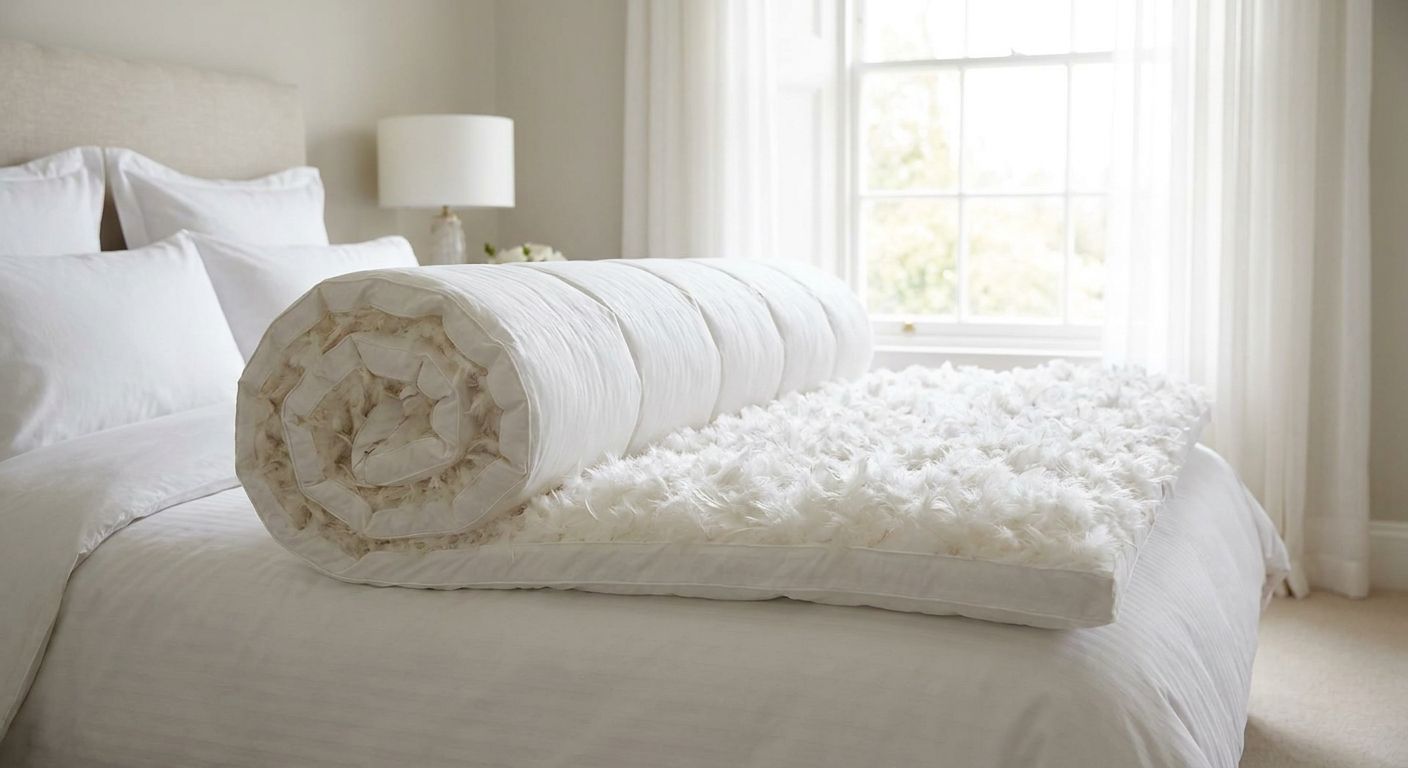
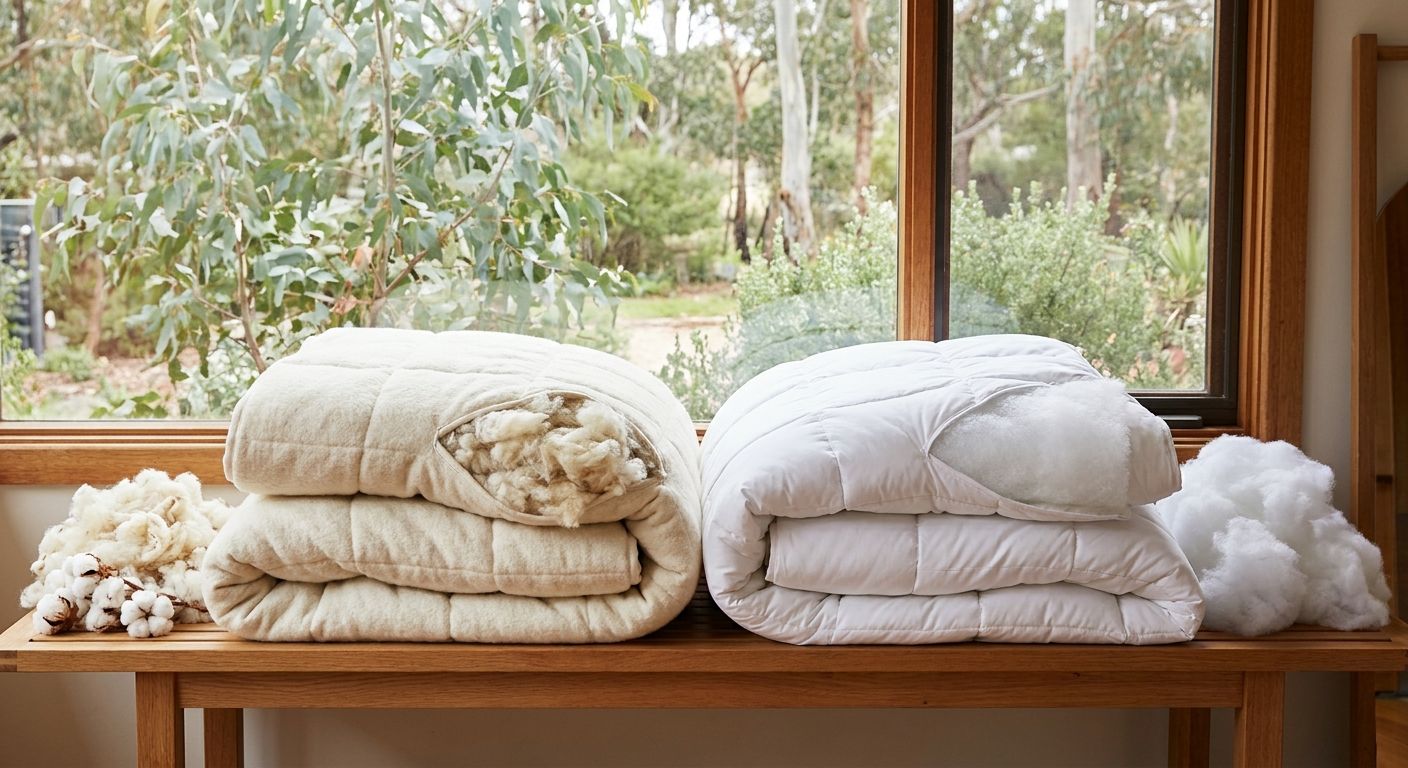
Natural fill (goose down, duck down, wool) traps air in clusters, giving you more warmth per gram than any synthetic equivalent. Synthetic fill (polyester fibre) is denser, cheaper to produce, and far more forgiving in the wash. Elegante's quilt range spans both, including a 50/50 goose down quilt built for guest suites where guests expect a five-star hotel feel. Neither fill is objectively better - the right call depends on your bedroom, your climate, and your laundry habits.
What you'll need
- Your bedroom's typical overnight temperature range (check a room thermometer over a week if unsure)
- Existing doona cover or quilt cover dimensions, so the new fill matches your set
- A note of any dust mite, feather, or down allergies in the household
- A washing machine capacity check - large down quilts often need a commercial-size machine
- A budget range, since fill type is the biggest single driver of quilt price
The steps
1. Check your allergy and asthma sensitivity first
This step overrides every other consideration. Down and feather fill can trigger reactions in people with existing dust mite or feather allergies, even when the quilt is well-encased. Synthetic fill is hypoallergenic by nature and the safer default for asthma-prone households or nurseries.
If nobody in the house has a known sensitivity, skip ahead. If someone does, synthetic fill is the only responsible choice - common mistake: assuming a "hypoallergenic down" label removes all risk. It reduces it; it doesn't eliminate it.
2. Match fill type to your climate and season
Australia's climate swings hard between states, so this step should happen before you look at a single product. A 500+ GSM goose down quilt is built for cold-climate winters in Melbourne, Hobart, or Canberra. Coastal and northern homes rarely need anything heavier than a 200-300 GSM synthetic quilt outside of a handful of cold nights a year.
For households wanting one quilt that works across seasons, read the dedicated breakdown on choosing a quilt for an Australian summer before committing to a heavier natural fill option.
3. Compare warmth ratings using GSM, not marketing language
GSM (grams per square metre) is the one number that tells you how much fill is actually inside the quilt, and it's directly comparable across natural and synthetic products. A 300gsm synthetic quilt and a 300gsm down quilt will not feel equally warm - down insulates more per gram - but GSM still lets you compare products within the same fill category honestly.
Ignore words like "extra plush" or "luxury weight" on their own. Ask for the GSM figure before you buy.
4. Assess care and cleaning requirements realistically
Synthetic quilts are largely machine washable at home, typically on a 30-40°C cycle, and dry faster after a wash. Down quilts usually require professional cleaning or a large-capacity commercial machine, plus thorough drying to prevent clumping and mildew.
If you're not prepared to air a quilt regularly or pay for periodic professional cleaning, synthetic fill is the lower-friction choice. Common mistake: washing a down quilt in a standard home machine drum that's too small - it compresses the fill unevenly and it won't spring back.
5. Set a budget by fill type, not by brand
Natural fill costs more at every quality tier because down and feather sourcing, cleaning, and quilting are more labour-intensive than synthetic fibre production. Decide your ceiling before you start browsing, or you'll anchor on the most expensive option in the range by default.
6. Decide your fill ratio if you're going natural
A 50/50 goose down and feather blend gives you loft and drape at a lower price point than a higher down-to-feather ratio. Higher-ratio down quilts (mostly down, minimal feather) loft more and weigh less for the same warmth, but they cost noticeably more. For a guest room used occasionally, the 50/50 blend is the better value call - Buy for guest suites and spare rooms.
7. Check breathability if you run hot at night
Down is naturally breathable and regulates temperature better than most synthetics, which can trap heat and leave you flipping the quilt off at 2am. If you sleep hot, prioritise a natural fill even in a moderate climate, or look for a synthetic quilt specifically described as moisture-wicking.
Troubleshooting
Quilt feels lumpy after a few months. Fill has shifted or clumped, usually from incomplete drying after a wash. Tumble on low with clean tennis balls or a dryer ball to redistribute fill, and air the quilt outdoors on a dry day.
Waking up sweating under a natural fill quilt. You've likely bought too high a GSM for your climate. Swap to a lighter down quilt or a lower-GSM synthetic for the warmer months instead of running one heavy quilt year-round.
Synthetic quilt has gone flat and thin. Polyester fibre compresses over time with regular washing and use. Fluff it in the dryer on a no-heat or low-heat tumble setting after each wash to restore loft.
Persistent musty smell after storage. The quilt was stored while still slightly damp. Always air a quilt fully before folding it into storage bags, and avoid vacuum-sealed compression for down quilts specifically - it crushes the clusters.
Allergic reaction despite a "hypoallergenic" down quilt. Stop using it and switch to a fully synthetic fill. No down treatment removes 100% of allergen risk for a genuinely sensitive sleeper.
Tools and resources
- Elegante for a full range of natural and synthetic fill quilts, including hotel-style down options
- 50/50 goose down quilts for guest suites for a mid-warmth, budget-conscious down option
- Choosing a quilt for an Australian summer if you need a lightweight option for the warmer months
- A local dry cleaner or commercial laundromat with large-capacity machines, for periodic down quilt cleaning
- A room thermometer, to track your actual overnight temperature range before buying
What to do next
Once you've settled on fill type, the next decision is sizing and room fit. If you're working with a compact bedroom, read the guide on choosing quilts for small bedrooms before you order, since heavier natural fill quilts add noticeably more bulk in storage and on the bed.
FAQ
What is the difference between natural and synthetic quilt fill?
Natural fill uses down or feather clusters that trap air for warmth, while synthetic fill uses manufactured polyester fibre. Natural fill insulates more per gram and lasts longer with proper care; synthetic fill is cheaper, hypoallergenic, and easier to wash at home.
Is a natural fill quilt better than synthetic for allergies?
No, synthetic fill is the safer choice for allergy sufferers. Down and feather can trigger reactions even in well-encased quilts, so households with dust mite or feather sensitivities should choose synthetic fill.
How much does a 50/50 goose down quilt cost compared to synthetic?
Down quilts cost more than synthetic quilts at every quality tier because of sourcing, cleaning, and quilting labour. Exact pricing varies by GSM and brand, so check current listings before setting a budget.
What GSM quilt is best for an Australian summer?
A quilt in the 200-300 GSM range suits most Australian summers, whether natural or synthetic fill. Heavier quilts above 400-500 GSM are built for cold-climate winters, not warm nights.
Can you machine wash a down quilt at home?
Most down quilts need a large-capacity commercial machine or professional cleaning rather than a standard home washer. Synthetic quilts are typically machine washable at home on a 30-40°C cycle.
Do synthetic quilts lose their loft over time?
Yes, polyester fill compresses with repeated washing and use, flattening faster than down. Tumbling on low heat with a dryer ball after each wash helps restore loft between quilts.
Which fill type is warmer for the same weight?
Down insulates more efficiently per gram than synthetic fibre, so a down quilt feels warmer than a synthetic quilt at the same GSM. That's why heavier winter quilts are more commonly filled with down or a down blend.
One last thing
The GSM number matters more than the fill type once you've narrowed down your allergy and climate needs - a well-matched synthetic quilt at the right GSM will outperform an ill-suited down quilt every time, and vice versa. Buy for your bedroom's actual temperature, not for the label on the packaging.