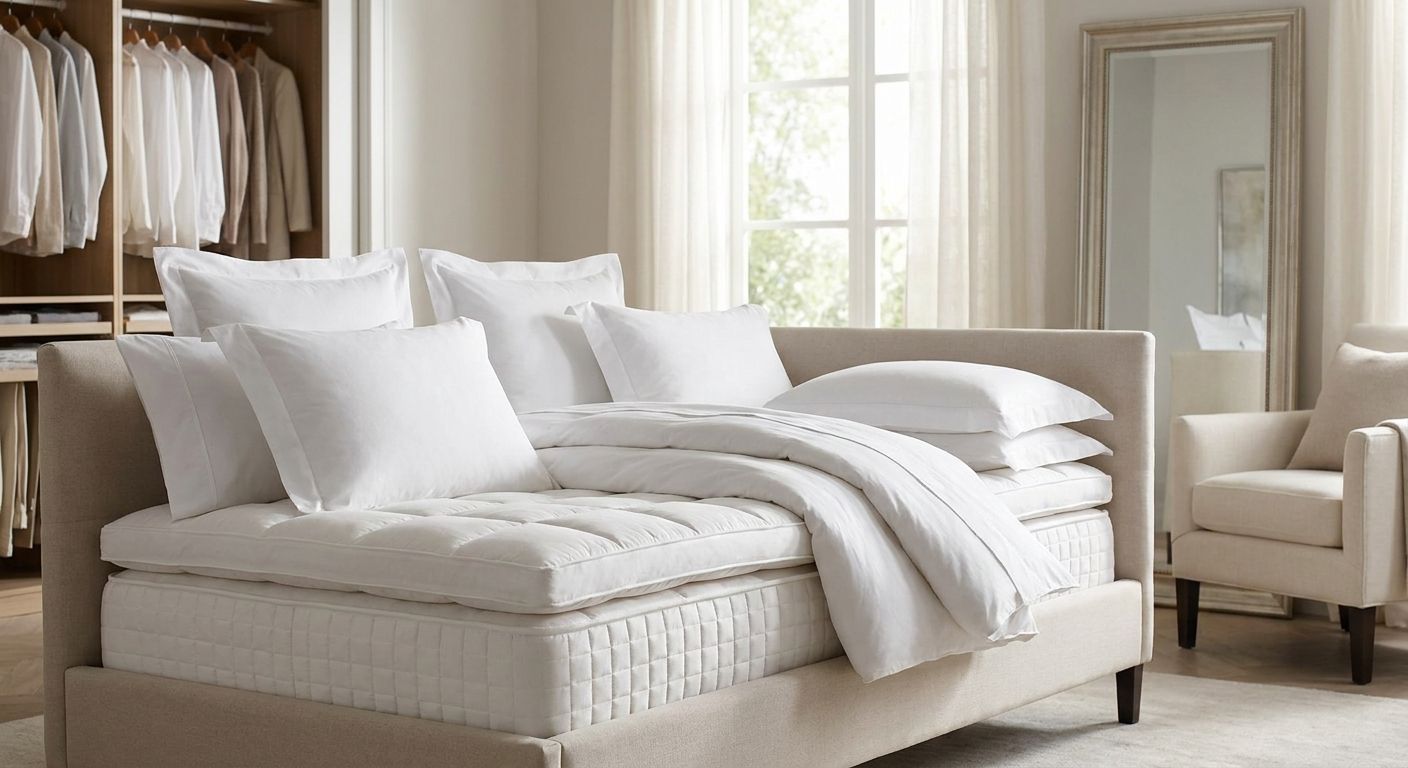
A dressing-room daybed gets used differently from a bed: shorter naps, reading sessions, and guest overflow, which means the topper needs hotel-grade comfort in a slimmer footprint. This guide ranks the fill types that actually hold up on a daybed and names the one to skip.
- A goose down hotel mattress topper wins for a dressing-room daybed used nightly - buy it.
- Wool-blend hotel mattress topper daybed picks handle Australian humidity better than synthetic fills.
- Skip microfibre toppers on daybeds - they flatten fastest under repeated daytime use.
- Match topper size to the daybed mattress first; oversized or undersized toppers slide by morning.
Why this matters
A dressing-room daybed sits outside the main bedroom, often against a wall or window seat, and it rarely gets the mattress upgrade a primary bed gets. The mattress underneath is frequently thinner or firmer than a bedroom mattress, so the topper is doing more of the comfort work. Elegante built its bedding range around the InterContinental hotel standard for exactly this reason - the topper needs to read as five-star even on a piece of furniture that's technically a sofa substitute.
Getting the fill wrong on a daybed shows up fast: heat retention in a small dressing room, a topper that migrates off a narrower mattress overnight, or a fill that compresses within months because the daybed gets sat on all day, not just slept on. Ranking hotel mattress topper daybed options in 2026 means weighing loft, breathability, and durability against that daytime-plus-nighttime use pattern.
How we ranked
Each pick below is assessed on four points that matter specifically for a dressing-room daybed: loft (does it add real cushioning without swallowing a narrow mattress), breathability (does it suit a smaller, often less-ventilated room), fit stability (does it stay put on daybed dimensions), and care burden (can it handle more frequent cleaning than a bedroom topper needs). Fill types are compared against established bedding-industry norms for loft and construction, not against a single tested unit.
The ranked list
1. Goose down hotel-style topper - the plush pick
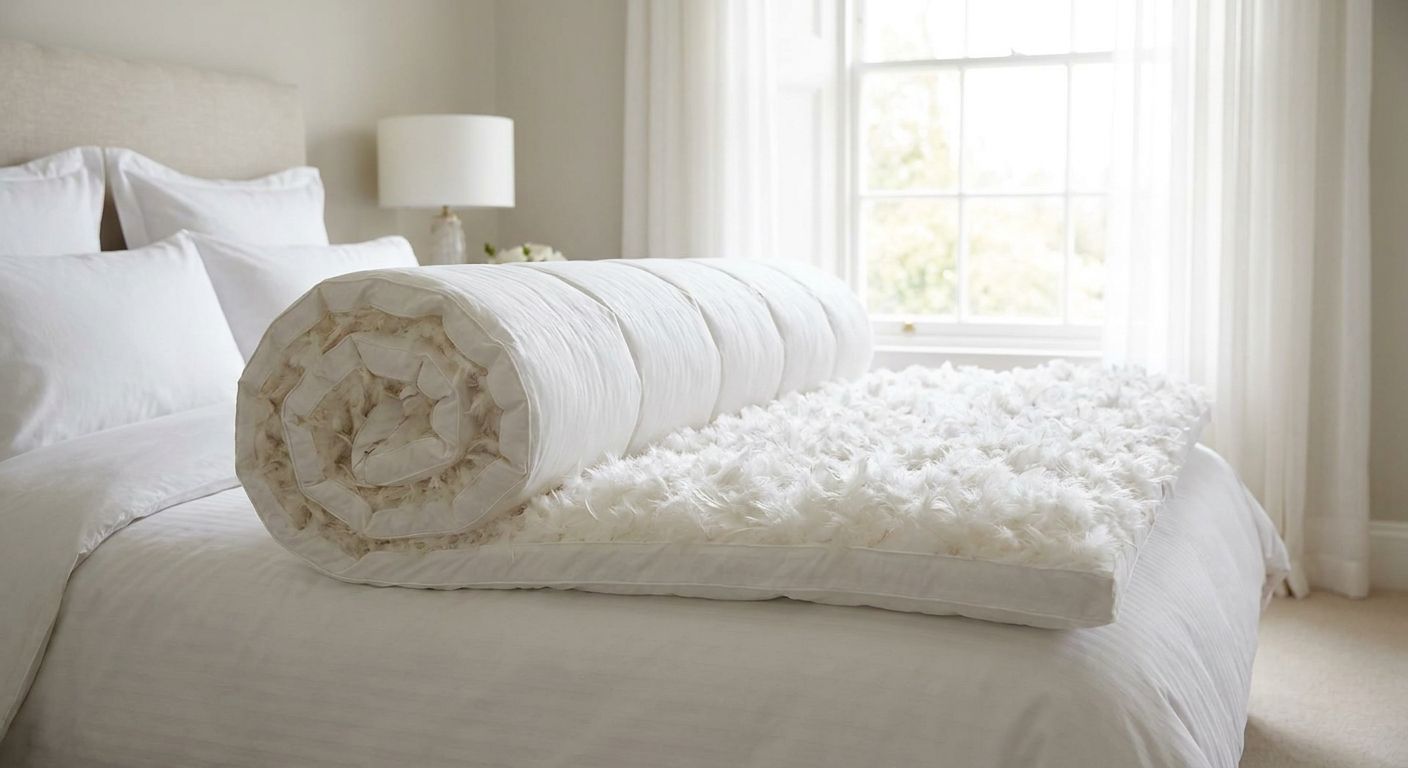
This is the fill hotel groups reach for when they want a bed to feel bottomless. A genuine down topper typically runs 5cm to 8cm of loft, enough to soften a firm daybed base without making the surface unstable for daytime sitting.
It breathes well because down traps air rather than moisture, which suits a smaller dressing room with limited airflow. The main tradeoff is upkeep - down needs periodic fluffing and a protective cover to keep oils and dust off the fill. For a daybed getting nightly use in 2026, this is the pick that most closely replicates the InterContinental-style turn-down feel. Pair it with the guidance in Elegante's small-apartment topper guide if the dressing room is tight on space. Buy.
2. Wool-blend hotel topper - the climate-smart pick
Wool regulates temperature naturally, pulling moisture away from the body rather than trapping it, which makes it the strongest option for humid Australian summers. Loft sits a touch lower than down, generally 3cm to 5cm, but the surface stays firmer underfoot, useful on a daybed that doubles as seating.
A wool-blend topper also resists dust mites better than synthetic fills, a small but real advantage in a guest-facing dressing room. If this daybed is doing double duty for overnight guests, the refresh angle in Elegante's guest-room refresh guide is worth reading alongside this pick. Buy.
3. Memory foam hybrid - the firm-support pick
Memory foam contours to body weight and holds its shape under repeated pressure, which sounds ideal for a daybed that gets sat on all day. The catch is heat: foam retains warmth more than down or wool, and a dressing room without strong airflow can turn uncomfortable overnight.
A hybrid construction - foam layered over a breathable base - solves some of that, but pure memory foam toppers are a harder sell for year-round Australian use. It's the right call for a daybed used mainly for daytime lounging rather than sleep. Consider.
4. Feather-and-down blend - the value hotel pick
Blending feather with down cuts cost while keeping most of the loft and softness of a pure down topper. Expect a slightly firmer, less cloud-like feel and a shorter lifespan before the fill needs refreshing, since feather quills compress faster than down clusters.
It's a sensible middle ground for a secondary daybed that doesn't get the nightly wear a main bed does. Consider.
5. Microfibre synthetic topper - the one to skip
Microfibre is the cheapest fill on the market and the fastest to flatten under repeated use, which is precisely the problem on a daybed that gets sat on throughout the day as well as slept on at night. It also traps heat more than natural fills, working against a small dressing room's limited airflow.
There's a place for microfibre on a rarely-used spare bed, but a dressing-room daybed in regular rotation will show flattening within a season. Skip.
6. Latex-topped hybrid - the wildcard
Latex adds bounce and airflow that foam lacks, and it holds its shape longer under the mixed daytime-and-nighttime pressure a daybed sees. It's naturally resistant to dust mites too, a genuine plus for a room that doubles as a dressing space.
The tradeoff is firmness - latex feels less plush than down straight out of the packaging, and sizing matters more here because a poor fit on a narrower daybed mattress will shift with use. Check dimensions against Elegante's guide to mattress topper sizing before buying. Consider.
Comparison at a glance
| Pick | Typical loft | Breathability | Best for | Verdict |
|---|---|---|---|---|
| Goose down | 5-8cm | High | Nightly use, plush feel | Buy |
| Wool-blend | 3-5cm | High | Humid climates, guest use | Buy |
| Memory foam hybrid | 5-7cm | Moderate | Daytime lounging | Consider |
| Feather-and-down blend | 4-6cm | Moderate-high | Secondary daybeds | Consider |
| Microfibre synthetic | 3-5cm | Low | Rarely-used spare beds only | Skip |
| Latex-topped hybrid | 4-6cm | High | Durability over plushness | Consider |
Where to buy
- Check the fill composition on the label before checkout - "down" and "down-blend" are not the same fill, and the difference shows up within a year of daybed use.
- Confirm the topper dimensions against the daybed mattress, not a standard bed size chart - daybed mattresses run narrower than single or queen frames.
- Favour a cotton-sateen or cotton-percale cover over the topper itself; it's easier to keep fresh on furniture that sees daytime traffic as well as sleep.
FAQ
What's the best hotel mattress topper for a daybed?
A goose down topper with 5cm to 8cm of loft is the best hotel mattress topper daybed pick for nightly use, with a wool-blend topper as the stronger choice in humid climates.
Is a memory foam topper good for a dressing-room daybed?
Memory foam works for daytime lounging but retains more heat than down or wool, which makes it a weaker pick for a daybed used for overnight sleep in a small room.
How thick should a mattress topper be for a daybed?
Most hotel-style toppers run 3cm to 8cm depending on fill type; thinner wool or latex toppers suit daybeds that double as seating, while down toppers over 5cm suit nightly sleep.
Do hotel mattress toppers fit standard daybed sizes?
Not always - daybed mattresses are frequently narrower than single or queen frames, so dimensions need checking against the actual mattress rather than a standard bed size chart.
How often does a hotel-style topper need replacing on a daybed?
A daybed sees more daytime pressure than a bedroom mattress, so synthetic fills like microfibre flatten within a season while down and latex hold shape considerably longer.
Is wool or down better for an Australian dressing room?
Wool regulates temperature and moisture better in humid conditions, while down delivers a plusher, more hotel-like feel; the right pick depends on whether the room has strong airflow.
Can a mattress topper make a daybed feel like a hotel bed?
Yes - the fill type matters more than the daybed frame itself, and a genuine down or down-blend topper closes most of the comfort gap between a daybed and a hotel mattress.
One last thing
The detail most buyers miss on a dressing-room daybed: fill type matters less than cover fabric once the topper sees daytime sitting as well as nighttime sleep. A cotton-sateen cover sheds dust and body oils faster than a synthetic cover, which keeps a mid-tier fill like feather-and-down performing closer to a pure down topper well into 2026 and beyond.