Thread count numbers on a bedding label range from 200 to 1,200 and beyond, and most of that range is marketing noise rather than useful information. This guide breaks down what thread count actually measures, which range matters for real comfort, and how to spot the inflated numbers used to disguise low-quality cotton.
- A genuine thread count guide points to 300-600 for single-ply cotton – anything above that on a retail label usually means multi-ply yarn, not more comfort.
- Egyptian cotton and combed long-staple cotton at 400-600TC outperforms a 1000TC polyester-cotton blend – buy the fiber, not the number.
- Percale weave at 200-300TC feels crisp and cool; sateen at 300-600TC feels soft and warmer – pick weave before you pick a number.
- Weight in grams per square metre (GSM) is a more honest comfort signal for linen and bamboo sheets than thread count.
Why this matters
Australian shoppers searching for a thread count guide in 2026 are usually trying to avoid two mistakes: buying scratchy 180TC sheets that pill within months, or overpaying for a 1500TC set that's really 375 single threads counted four times over through a marketing trick called multi-ply inflation. Getting the number right protects both your budget and your sleep.
Hotel bedding brands settled on the 300-600TC range decades ago for a reason – it's the sweet spot where single-ply, combed or Egyptian cotton yarns are fine enough to feel soft without being so thin the weave loses durability. Elegante's best luxury bed sheets guide walks through the InterContinental-style cotton sets that sit in that exact band, which is the benchmark this guide uses throughout.
What you'll need
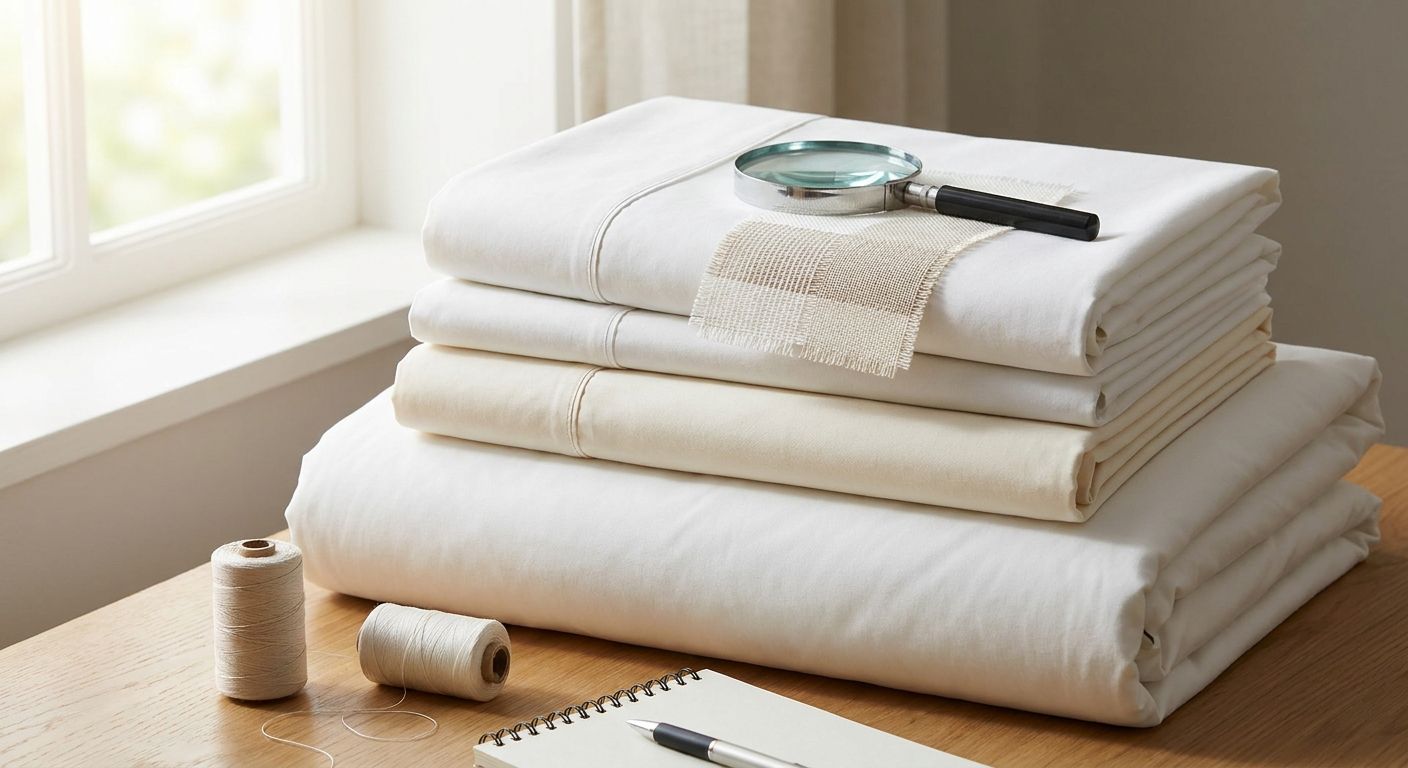
- A magnifying glass or your phone's zoom camera, to check yarn thickness on a swatch or existing sheet
- The product's fiber type and ply count, not just the thread count number on the label
- A rough sense of your climate – percale for Queensland summers, sateen or a heavier weave for Victorian winters
- Access to Elegante's bedding range if you're comparing against a hotel-grade benchmark, including sets referenced in the 5-star hotel bedroom guide
- 10-15 minutes to compare two or three product listings side by side before you buy
The steps
1. Understand what thread count actually measures
Thread count is the number of horizontal (weft) and vertical (warp) threads woven into one square inch of fabric. A 300TC sheet has roughly 150 threads running each way, added together to reach 300.
This number says nothing about fiber quality, staple length, or how the yarn was spun – it only measures density. A dense weave of coarse, short-staple cotton will still feel rougher than a lower-count weave of fine, long-staple cotton, so treat thread count as one input, not the final verdict.
Common mistake: assuming thread count alone predicts softness. It predicts density; fiber quality predicts softness.
2. Match the weave to how you actually sleep
Percale is a plain, one-over-one-under weave that lands at 200-300TC and feels crisp, matte, and cool against skin – the classic hotel-crisp sheet. Sateen uses a four-over-one-under weave that packs more threads per inch, typically 300-600TC, giving it a subtle sheen and a softer, warmer hand feel.
Hot sleepers and anyone in a Brisbane or Perth summer should lean percale. Sydney and Melbourne winters, or anyone who likes a heavier, more luxurious drape, should lean sateen. Neither weave is objectively better – the mistake is picking a high thread count in the wrong weave and wondering why the sheet still feels wrong.
Common mistake: buying a 600TC sateen set expecting the crisp, cool feel of percale, then returning it thinking the thread count was fake.
3. Check the fiber before you check the number
Egyptian cotton and Pima cotton use extra-long-staple fibers that spin into finer, stronger single-ply yarn. That's why a 400TC Egyptian cotton sheet consistently outperforms a 600TC generic cotton-polyester blend on softness and pilling resistance after repeated washing.
Look for "combed cotton," "long-staple," or "Egyptian cotton" on the label alongside the thread count. If the listing only states a number with no fiber name attached, treat that as a warning sign rather than a selling point.
Common mistake: comparing thread count across different fiber types as if they're the same product category.
4. Watch for multi-ply inflation above 600TC
Anything advertised above 800-1000TC on cotton sheets is almost always achieved by twisting two or more thinner threads together and counting each strand separately. A genuinely fine single-ply 400TC sheet can feel softer and last longer than a multi-ply 1000TC sheet made from lower-grade cotton.
Manufacturers are not required to disclose ply count on Australian retail labels in 2026, so the only reliable move is to ask the retailer directly or stick to brands that publish single-ply construction details. Hotel linen suppliers, including the InterContinental-style ranges stocked by Elegante, typically sit in the 300-600 single-ply range for exactly this reason – it's the point of diminishing returns.
Common mistake: treating a triple-digit jump in thread count as a straightforward upgrade.
5. Use GSM as a second reference point for non-cotton sheets
Thread count doesn't translate cleanly to linen, bamboo, or Tencel sheets because those fibers are woven and measured differently. For those materials, grams per square metre (GSM) is the more honest density figure – linen typically sits at 150-200 GSM, while a mid-weight bamboo sheet lands around 300-400 GSM.
If you're set on cotton, thread count remains the right metric. If you're shopping linen or bamboo blends, ask for GSM instead and ignore any thread count claim on that listing.
Common mistake: demanding a thread count figure from a linen retailer, which forces them to either invent a number or quote an irrelevant one.
6. Test the feel against a known benchmark before committing
If you have access to a hotel-quality set, run your hand across it and note the weight and drape. Elegante's hotel-quality pillows guide covers a similar benchmarking approach for pillow fill, and the same principle applies to sheets – compare against something you already know feels right rather than trusting a number in isolation.
When buying online, read three or four verified reviews specifically mentioning softness after multiple washes, since first-touch feel and six-month durability are different questions.
Common mistake: judging a sheet purely on unboxing feel before it's been through a wash cycle.
7. Budget for the whole bedding system, not just the sheet
A well-chosen 400-500TC sheet still needs the right mattress topper thickness and pillow support to deliver the full hotel feel. Elegante's guide on mattress topper thickness is worth checking before you finalise a bedding order, since a mismatched topper can make even a premium sheet feel less luxurious than it is.
Treat the sheet purchase as one part of the bedroom, not the whole solution.
Common mistake: spending the entire bedding budget on thread count and leaving nothing for pillow and topper quality.
Troubleshooting
- Sheets feel scratchy despite a high thread count – check for polyester-cotton blends and multi-ply construction; the fiber, not the number, is the likely cause.
- Sheets pilled after a few washes – short-staple cotton pills faster regardless of thread count; look for long-staple or combed cotton on the next purchase.
- Sheets feel too hot at night – you likely bought sateen when you needed percale; swap weave type rather than adjusting thread count.
- Retailer won't confirm ply count – treat any thread count above 800 on cotton as a red flag and ask for single-ply confirmation in writing before buying.
- Linen or bamboo sheet has no thread count listed – that's normal; ask for GSM instead, since thread count isn't the standard metric for those fibers.
- Sheet shrank after washing ‑ check the care label for cold-wash and low-heat-dry instructions, since high heat shrinks natural fiber sheets regardless of thread count.
Tools and resources
- Best luxury bed sheets for a 5-star hotel feel – the benchmark range for 300-600TC cotton sets
- How to create a 5-star hotel bedroom at home – how sheets fit into the broader bedroom system
- Hotel-quality pillows guide – the same benchmarking logic applied to pillow fill
- Mattress topper thickness guide – completes the bedding system once your sheet is chosen
- A tape measure and kitchen scale, if you want to estimate GSM on linen or bamboo sheets yourself
What to do next
Once you've settled on a thread count and weave, the next decision is how the finished bed looks when it's made up for guests or everyday use. The how to style a hotel bed for entertaining guests guide covers layering, folding, and finishing touches that make a well-chosen sheet set actually look like a five-star room.
FAQ
What is the best thread count for luxury bed sheets?
300 to 600 single-ply thread count is the best range for cotton sheets in 2026. Above 600, most listings rely on multi-ply yarn rather than genuinely finer thread.
Is 1000 thread count better than 400 thread count?
Not necessarily – a 1000TC label is almost always multi-ply cotton counted as if each twisted strand were separate. A well-made 400TC single-ply Egyptian cotton sheet often feels softer and lasts longer.
Does thread count matter for linen sheets?
No, thread count isn't the standard measure for linen. Grams per square metre (GSM) is the more accurate density figure, with linen typically sitting at 150-200 GSM.
What's the difference between percale and sateen weave?
Percale uses a one-over-one-under weave at 200-300TC for a crisp, cool, matte finish. Sateen uses a four-over-one-under weave at 300-600TC for a softer, slightly glossy feel with more warmth.
How much does a high thread count sheet set cost in Australia?
Pricing varies by fiber and brand, so check current listings directly rather than relying on a fixed figure. Fiber quality and construction affect price more than the thread count number itself.
Is Egyptian cotton always a high thread count?
No, Egyptian cotton is a fiber type, not a thread count. It commonly appears in the 300-600TC range because its long-staple fibers spin well into fine single-ply yarn at that density.
Can a low thread count sheet still feel luxurious?
Yes, a 200-300TC percale sheet made from long-staple combed cotton can feel crisp and premium. Thread count alone doesn't determine luxury – fiber and weave do more of the work.
How do I know if a thread count is inflated?
Any cotton sheet advertised above 800-1000TC without stating single-ply construction is likely inflated through multi-ply counting. Ask the retailer directly for ply count before buying.
One last thing
The single biggest giveaway of an inflated thread count claim isn't the number itself – it's the absence of a fiber name next to it. Any listing that states "1200 thread count" with no mention of Egyptian cotton, Pima cotton, or long-staple combed cotton is telling you everything you need to know by what it leaves out.