Getting the bed at InterContinental to look effortless takes more than a doona and two pillows tossed on top — it's a specific stacking order, and once you know it, you can build a 5-star hotel bed at home in under ten minutes each morning.
- How to layer hotel bedding in 2026 comes down to five stacked layers: topper, fitted sheet, flat sheet, quilt, pillows.
- A 50/50 goose down quilt with a crisp cover gets closer to the InterContinental look than a heavy doona alone.
- Firm pillows go flat against the headboard, soft pillows sit forward — reverse this and the stack looks sloppy, not styled.
- Skip the flat sheet at your own risk: it's the layer that gives hotel beds their sharp, taut finish.
Why this matters
Hotel bedrooms photograph well and sleep well for one reason: the layering is deliberate, not decorative. Every piece — topper, sheet, quilt, pillow — earns its place because it changes how the bed feels or how it reads visually.
Skip a layer and the whole stack collapses, literally and visually. A doona without a flat sheet slides around by 3am. Pillows without a firm base underneath go flat by week two. Knowing how to layer hotel bedding properly means every piece is doing a job, not just sitting there for the photo.
What you'll need
- A mattress topper (adds loft and the plush give hotel mattresses are known for)
- A fitted sheet, ideally 300+ thread count for the smooth surface hotels use
- A flat sheet — the layer most home beds skip, and the one that separates a made bed from a styled one
- A quilt or doona with a removable cover, sized to overhang the mattress by 30-40cm on each side
- 4-6 pillows across at least two firmness levels: firm for structure, soft for the front layer
- A folded throw, bed runner, or bench cushion for the foot of the bed (optional but does most of the visual heavy lifting)
- 15-20 minutes the first time you build the stack; under 10 once you know the order
Start with pillows and sheets as your foundation. If you're still deciding on fill weight and firmness, the guide on choosing hotel-quality pillows covers what InterContinental-style rooms actually use and why softness varies by pillow position, not personal taste.
The steps
1. Fit the topper before anything else
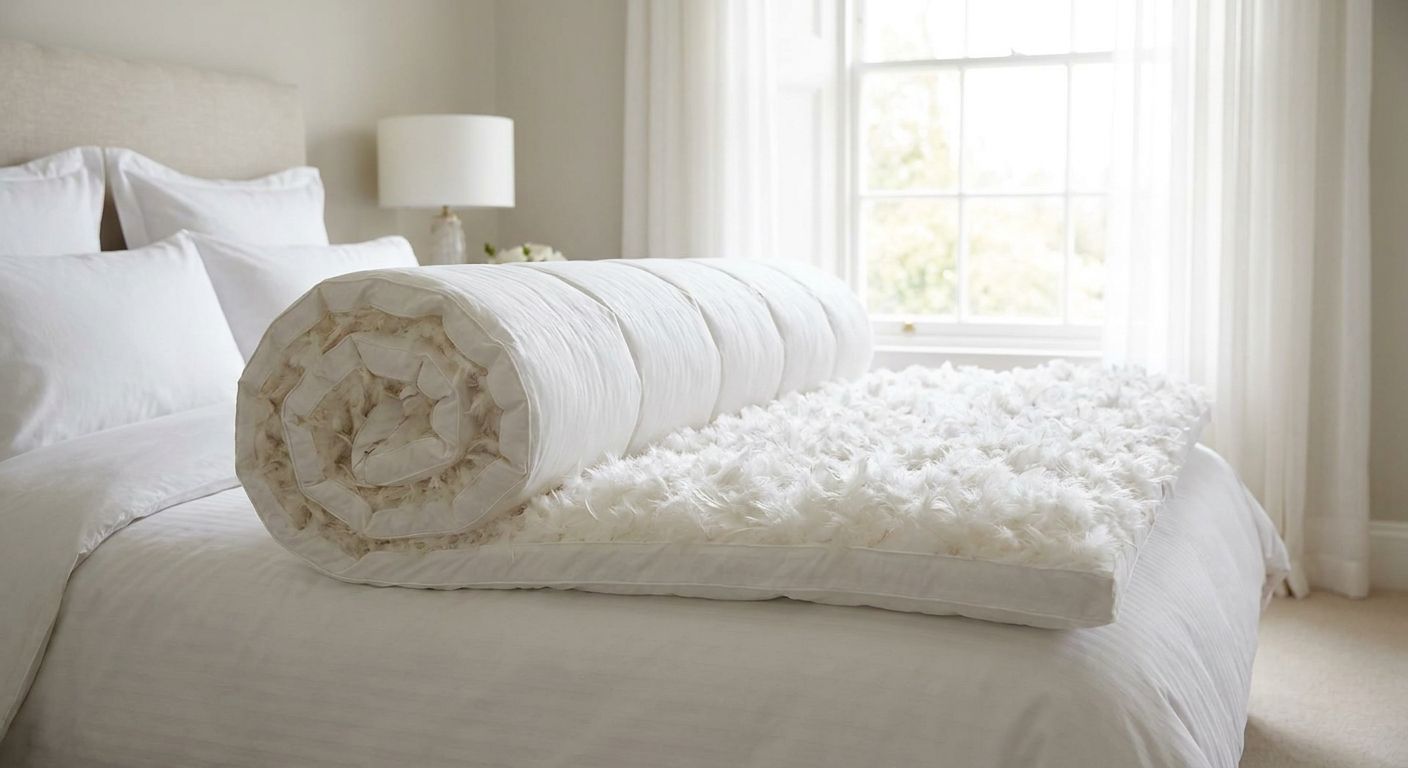
The topper is what makes a hotel mattress feel deep and enveloping rather than firm and flat. Lay it directly on the mattress, corners tucked under, before any sheet goes on — this is the layer most people forget and the one that changes how the whole bed feels within the first night.
Common mistake: buying a topper sized to the mattress model number instead of the actual dimensions. Always measure your mattress in 2026 before ordering, since bedding sizing still varies between Australian and international brands.
2. Pull the fitted sheet taut, corner to corner
A fitted sheet with visible wrinkles undoes the entire hotel effect before you've even added the quilt. Pull each corner diagonally, working opposite corners in pairs, so the sheet sits drum-tight across the topper.
Hotel housekeeping teams do this in under 90 seconds per bed — the trick is tension, not tucking. If your sheet still bunches, it's too big for the mattress depth; a deeper topper needs a deeper-pocket fitted sheet.
3. Add the flat sheet with a hospital corner
This is the step most home beds skip, and it's the one that gives hotel beds their crisp, folded-down edge at the top. Lay the flat sheet with roughly 20cm of overhang at the head of the bed, then fold and tuck the sides in a hospital corner at the foot.
The best luxury bed sheets for a 5-star hotel feel sit heavier and drape better than budget percale, which matters here specifically because the flat sheet is the layer guests actually see folded back.
4. Layer the quilt, not just the doona
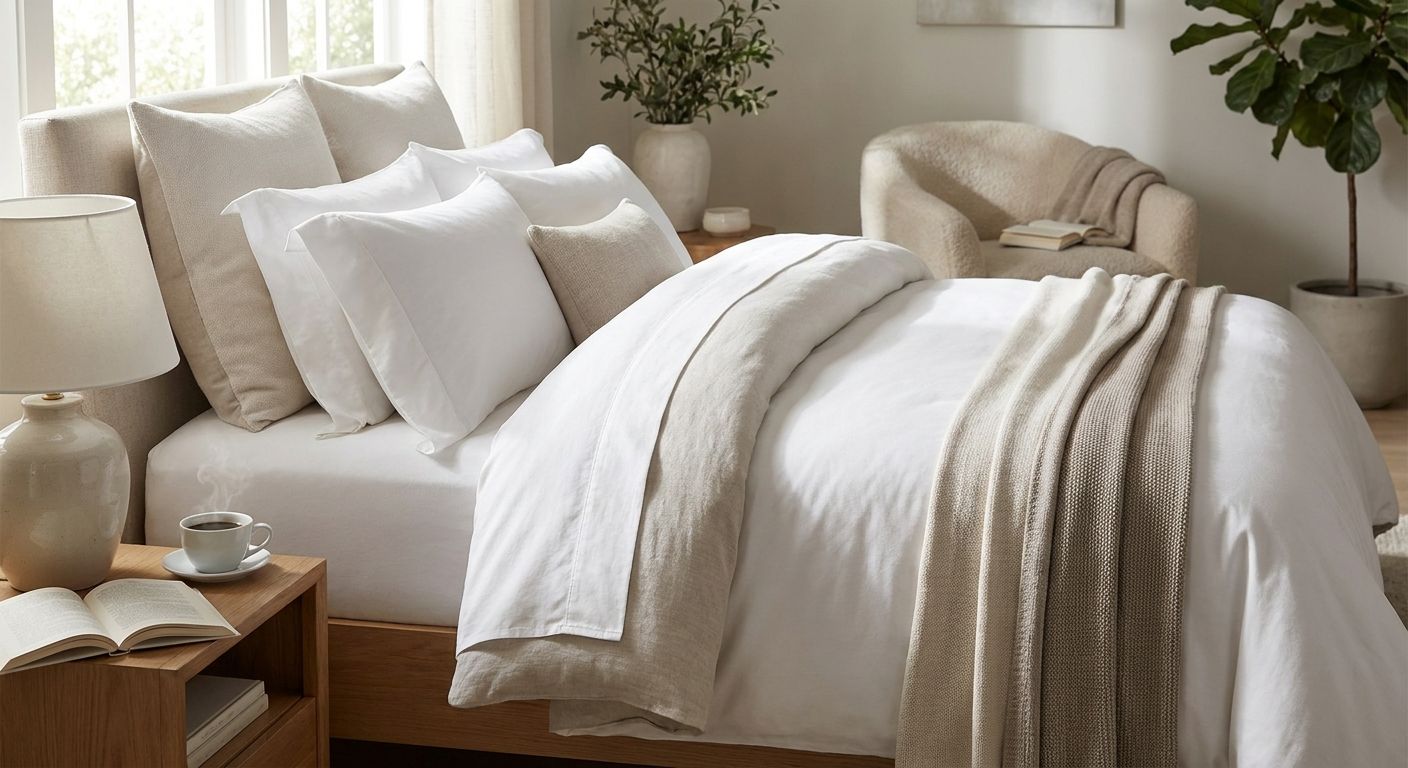
Hotel beds rarely use a single thick doona. They use a quilt — often a 50/50 goose down fill — folded back a third of the way down the bed, exposing the flat sheet underneath. This is the visual signature of the hotel look: two textures showing at once.
If you're choosing weight for the first time, match it to season rather than defaulting to the heaviest option on the shelf; a quilt built for an Australian summer behaves very differently under aircon than one built for a Melbourne winter.
5. Build the pillow stack in firmness order
Stack pillows firm-to-soft, back-to-front: two firm pillows flat against the headboard, two medium pillows in front of those, then one or two soft or decorative pillows leaning forward at a slight angle. This is the order hotels use because it's structurally stable, not just aesthetically layered.
Getting the base firmness wrong is the most common mistake — a soft pillow at the back collapses within a week and the whole stack tips forward. If you sleep on your side and back interchangeably, sorting soft versus firm placement properly matters more than pillow count.
6. Fold and place the throw or runner
A folded throw across the foot of the bed, or a slim bench cushion, adds the horizontal line that breaks up an otherwise all-white or all-neutral stack. Fold it in thirds and lay it roughly a third of the way up from the foot, never centred.
This step is optional structurally but it's what makes the bed photograph like a hotel room rather than a made bed — texture and colour contrast against a monochrome quilt cover.
7. Square everything off
Step back, and adjust anything that broke symmetry while you were placing pillows — a shifted quilt corner, an uneven overhang, a throw that slid. Hotel rooms get this final pass every single morning; it takes 30 seconds and it's the difference between "made" and "styled."
“A hotel bed isn't heavier bedding — it's more layers, each one doing a different job.”
Troubleshooting
- Pillows go flat within weeks. You've likely put a soft pillow where a firm one should sit. Swap the back row for firm-fill pillows and keep soft ones strictly at the front.
- The quilt slides off during the night. The cover is too smooth for the sheet fabric underneath, or the quilt is undersized for the bed. Size up by at least 30cm of overhang per side.
- Sheets bunch at the corners by morning. The fitted sheet pocket is too shallow for your topper-plus-mattress depth. Check depth before repurchasing — this is the single most common return reason in 2026 for hotel-style sheet sets.
- The bed sleeps hot. A heavy year-round quilt is the usual cause. Rotate to a lighter quilt for warmer months rather than adjusting the whole stack; the guide on choosing a quilt for an Australian summer breaks down fill weight by season.
- The topper won't stay in place. Most toppers rely on the fitted sheet for tension rather than straps. Check the size against your actual mattress dimensions using the sizing guide before assuming the topper itself is faulty — see how to pick mattress topper size.
Tools and resources
- A tape measure, for mattress depth and quilt overhang
- A mattress topper sizing guide if you're unsure which depth fits your bed
- A doona and quilt styling guide for choosing fill weight and cover finish
- A hotel-quality pillow guide for sorting firm versus soft fill before you buy
- 15 minutes on a Sunday to reset the full stack, since daily quick-fixes lose the layering order within a week
What to do next
Once the layering itself is dialled in, the next lever is the room around the bed — lighting, bedside styling, and the furniture that frames the stack. The full walkthrough on creating a 5-star hotel bedroom at home picks up exactly where this guide leaves off.
FAQ
How do you layer bedding to look like a hotel?
Stack five layers in order: mattress topper, fitted sheet, flat sheet, quilt folded back a third of the way down, then pillows arranged firm-to-soft from back to front. This order is what separates a hotel-style bed from a standard made bed in 2026.
How many pillows does a hotel bed use?
Most hotel beds use four to six pillows across two or three firmness levels. Two firm pillows sit flat against the headboard, with medium and soft pillows layered forward.
Do hotel beds use a flat sheet and a quilt cover?
Yes, hotel beds layer both — the flat sheet folds back over the quilt at the head of the bed, showing two textures at once. This is the detail most home beds skip.
What thread count feels like a hotel bed sheet?
Aim for at least 300 thread count in a sateen or percale weave for the smooth, heavier drape hotels use. Thread count alone matters less than fibre quality, but 300+ is a reliable minimum.
Should the quilt or doona be heavier than a normal doona?
Not necessarily heavier, but layered differently. A 50/50 goose down quilt with a lighter fill often reads more like a hotel bed than a thick single doona because it drapes rather than puffs.
How do you stop pillows going flat on a hotel-style bed?
Keep firm pillows at the back of the stack and soft pillows only at the front. Reversing this order is the main reason pillow stacks flatten within a few weeks.
What size should a quilt be for the hotel-style overhang?
Size the quilt so it overhangs the mattress by 30 to 40cm on each side. Anything tighter looks like a fitted doona rather than a layered hotel quilt.
Is a mattress topper necessary for the hotel bed look?
It's the layer that creates the plush, deep feel hotel mattresses are known for, so skipping it flattens the whole stack visually and physically. Fit it before the sheets, not after.
One last thing
The detail hotel housekeeping teams get right that most home beds miss isn't the pillow count or the quilt weight — it's the flat sheet fold at the head of the bed. It's the one layer that's purely visual, does nothing for warmth, and is still the first thing your eye reads when you walk into the room. Get that fold sharp and the rest of the stack reads as intentional, even on a day when everything else is thrown together in five minutes.