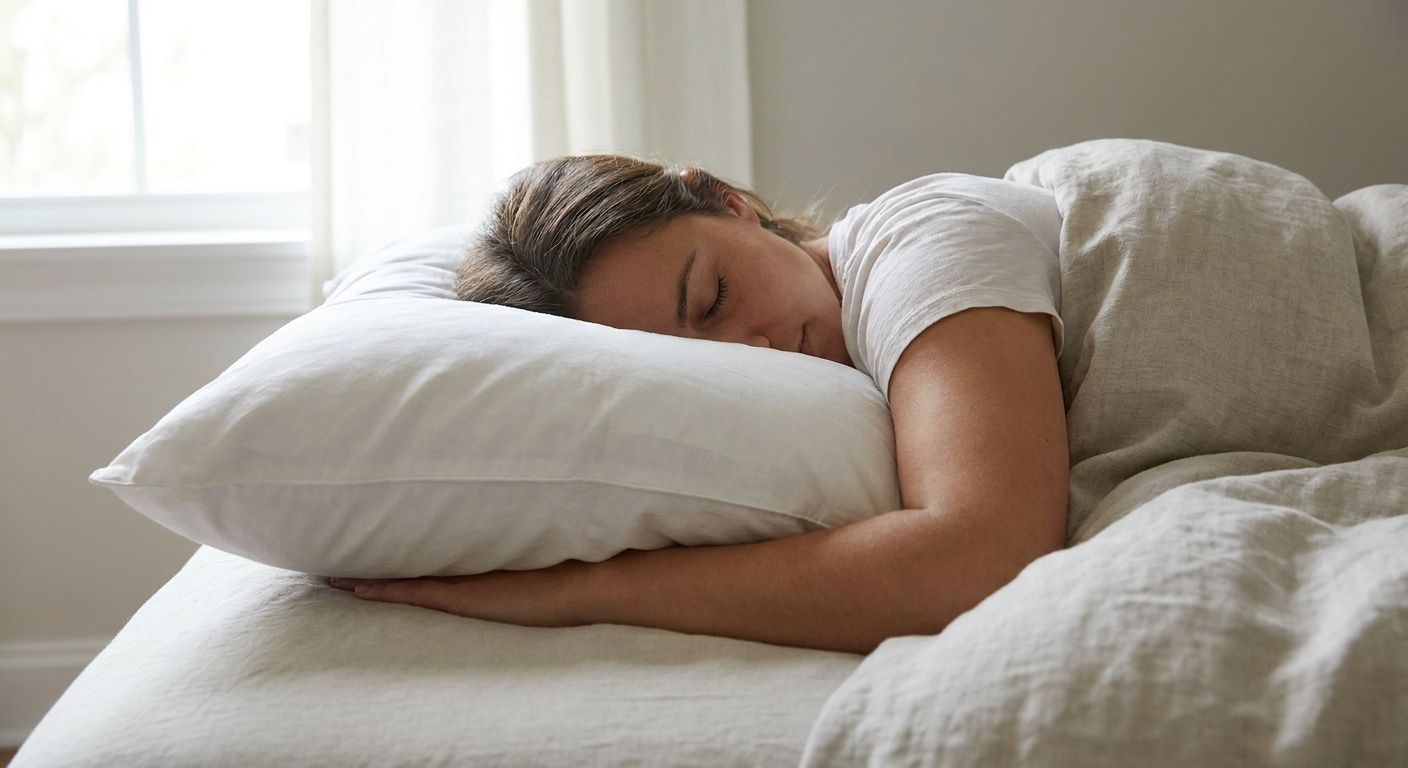
Stomach sleepers who stack a tall pillow under their head wake up with a stiff neck more often than any other sleep position — the fix is loft, not softness alone, and picking the wrong number in centimetres undoes everything else about a good pillow.
- Stomach sleepers need a soft pillow loft of roughly 3-5cm to keep the cervical spine neutral — anything taller forces the neck into extension.
- Ultra-low synthetic and 50/50 goose down pillows compress closest to that range and both carry a Buy verdict for 2026.
- High-loft cluster fibre and thick contoured foam pillows overshoot the mark and get a Skip.
- Combination sleepers who shift between stomach and side get a Consider on a hybrid low-loft design, not a full soft pillow.
Why this matters
Loft is the height a pillow holds once your head is resting on it, not the height in the packaging photo. For stomach sleepers, that number decides whether your neck sits flat or gets pushed upward for six to eight hours a night.
Most pillow guides talk about firmness first. That's backwards for this sleep position — a pillow can be soft and still be the wrong shape if the loft is too tall, and it can be firm-adjacent and still work if the loft sits low enough. Elegante sells 5 star InterContinental Hotels pillow ranges built around exactly this distinction, which is why loft, not thread count, is the first spec worth checking.
The general rule for stomach sleeping: keep loft in the 3-5cm (roughly 1-2 inch) range once compressed. Go taller and the head tips back, straining the neck and lower back over a night's sleep. Go flatter than that and you lose the support that stops your face pressing fully into the mattress.
How we ranked
Each pick below is judged on three things: compressed loft under real head weight, fill type and how it holds that loft over a night, and how the pillow performs specifically for the stomach position rather than as a general-purpose pillow. A pillow that's excellent for back sleepers can still be the wrong call here if its loft sits too high once you're face-down.
Verdicts are Buy, Consider, or Skip. Buy means the loft and fill combination suits stomach sleeping without modification. Consider means it works for some sleepers — usually those who shift position through the night. Skip means the loft range is wrong for this position regardless of how comfortable the pillow feels standing up.
The ranked picks
1. Ultra-low loft synthetic pillow — the safe pick
Synthetic microfibre fill at a low loft compresses evenly and doesn't spring back the way down clusters can. That consistency matters for stomach sleepers because the pillow needs to hold roughly the same 3-4cm height for the full night, not just for the first hour.
The soft pillow options built around this lower profile are the entry point most stomach sleepers should start with in 2026 — no adjustment period, predictable feel, easy to replace. Verdict: Buy.
2. 50/50 goose down, low-profile fill — the plush minimalist
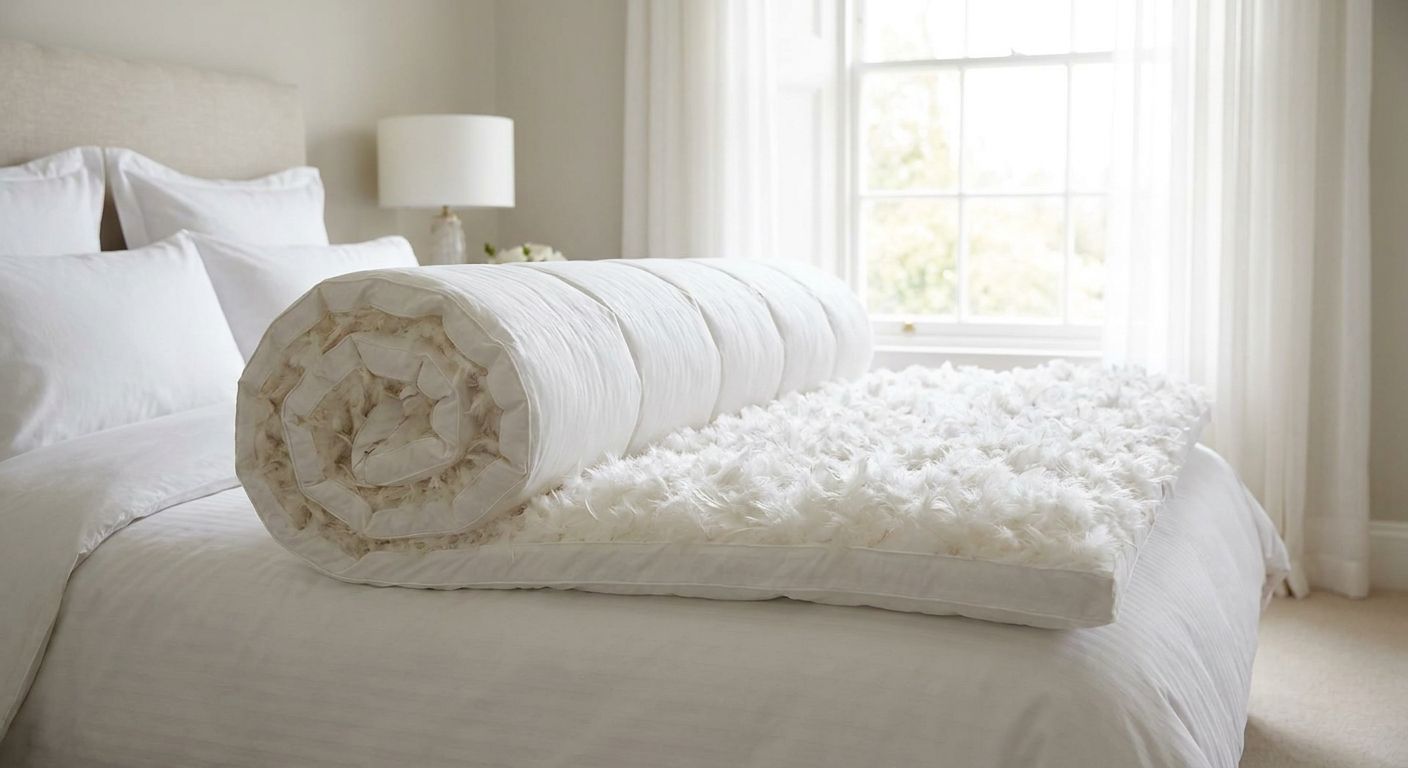
A 50/50 goose down and feather blend gives you the softest hand-feel of any pick here while still compressing down to a low loft once your head settles in. The 50/50 ratio matters — a higher down percentage lofts back up faster and can push a stomach sleeper's neck out of alignment mid-sleep.
The 50/50 goose down pillow range suits anyone who wants a hotel-soft feel without the rebound problem of 100% down fill. Elegante's InterContinental Hotels pillow line uses this blend specifically because it holds a lower profile than premium all-down alternatives. Verdict: Buy.
3. Hybrid low-loft pillow — for combination sleepers only
If you start on your stomach and roll to your side through the night, a pure soft pillow will feel too flat once you've rolled. A hybrid design with a slightly firmer edge and soft centre solves that without forcing a full switch to a firm pillow.
This is the one pick that isn't a straight soft-pillow recommendation — it's a compromise, and the comparison between soft and firm pillows for combination sleepers lays out exactly when this trade-off is worth it. Verdict: Consider.
4. High-loft cluster fibre pillow — the wildcard that fails here
Cluster fibre fill looks soft on a shelf and feels soft under a hand, but it lofts back up fast and typically sits well above the 5cm mark that stomach sleeping needs. It's built for back and side sleepers who want head elevation, which is the opposite of what a stomach sleeper's neck needs.
Buying this fill type for stomach sleeping is the single most common mismatch in soft pillow shopping. Verdict: Skip.
5. Thick contoured foam pillow — the shape mismatch
Contoured foam pillows are shaped for the curve of a neck resting on its side or back. Face-down, that curve pushes straight into the jaw and forehead, and the loft at the centre panel usually runs 8-10cm or more — roughly double what a stomach sleeper should be using.
These pillows are well engineered for the position they're designed for. Stomach sleeping isn't that position. Verdict: Skip.
Comparison table
| Pick | Compressed loft | Fill type | Best for | Verdict |
|---|---|---|---|---|
| Ultra-low synthetic | 3-4cm | Microfibre | First-time low-loft buyers | Buy |
| 50/50 goose down | 3-5cm | Down/feather blend | Softest feel, stable loft | Buy |
| Hybrid low-loft | 4-6cm | Mixed zone fill | Combination sleepers | Consider |
| High-loft cluster fibre | 8cm+ | Cluster fibre | Back/side sleepers | Skip |
| Thick contoured foam | 8-10cm+ | Memory foam | Side sleepers only | Skip |
If the crank point on this decision is one sentence, it's this: anything that compresses past 6cm under your head is off the list for stomach sleeping, no matter how good the fabric feels.
“Anything that compresses past 6cm under your head is off the list for stomach sleeping, no matter how good the fabric feels.”
Where to buy
- Check the compressed loft, not the packaging loft. Retail listings often quote the pillow's shape before any weight is on it — ask for or look for a compressed measurement.
- Match the fill percentage to your body weight. Heavier sleepers compress down fill faster, so a 50/50 blend that's perfect for one person can loft too high for a lighter sleeper.
- Buy from a range that publishes loft specs by pillow, not by collection. Elegante's InterContinental Hotels pillow range lists loft and fill ratio per product rather than as a single blanket spec across the whole line, which is the detail that actually matters for this decision.
What to avoid
- "Soft" on the label without a loft number. Softness describes hand-feel, not the height that matters for spine alignment — always look past the marketing word to the measurement.
- Pillows marketed as "universal" or "all sleep positions." A pillow can't simultaneously suit a stomach sleeper's 3-5cm need and a side sleeper's 10cm+ need — one of those claims is wrong.
- Buying loft based on firmness rating alone. A firm pillow with low loft and a soft pillow with low loft can both work for stomach sleeping; a soft pillow with high loft never will.
FAQ
What's the best soft pillow loft for stomach sleepers?
The best soft pillow loft for stomach sleepers sits around 3-5cm compressed. Anything taller pushes the neck into extension and causes stiffness by morning.
Is a soft pillow better than a firm pillow for stomach sleeping?
Softness alone doesn't decide it — loft does. A soft pillow at the right low loft outperforms a firm pillow at a high loft for this sleep position.
How much does a 50/50 goose down pillow cost in 2026?
Prices vary by size and brand, so check current listings directly rather than relying on a fixed figure — loft and fill ratio matter more to the buying decision than price alone.
Can stomach sleepers use a memory foam pillow?
Most contoured memory foam pillows run 8-10cm or higher at the centre panel, which is too tall for stomach sleeping. A flat, low-loft foam design can work if the compressed height stays under 5cm.
Do combination sleepers need a different pillow than stomach sleepers?
Yes — combination sleepers who move between stomach and side benefit from a hybrid low-loft pillow rather than a pure soft pillow, since a pure soft design can feel too flat once they roll onto their side.
How do I measure pillow loft before buying?
Press down on the pillow with the pressure of a resting head and measure the compressed height, not the relaxed height straight off the shelf. Retail spec sheets sometimes list this; if not, ask before buying.
Why does down percentage matter for loft?
A higher down percentage lofts back up faster after compression, which can push a stomach sleeper's neck out of alignment through the night. A 50/50 down and feather blend holds a lower, steadier loft.
What happens if a stomach sleeper uses too high a loft?
Too high a loft tilts the head backward, straining the neck and upper back over a full night's sleep. This is the most common cause of morning stiffness reported by stomach sleepers.
One last thing
The detail most stomach sleepers miss isn't fill type — it's that the same pillow can measure differently depending on how it's cared for. Down and feather blends lose loft over months of use and need occasional fluffing to hold their compressed height where you bought it; synthetic microfibre holds its shape longer but loses it all at once when it's time to replace it. Check compressed loft again after six months, not just on day one.